A Little night music


This last month I have been playing in a musical. I am playing in a Stephen Sondheim show called “A little night music” it’s being produced with a reduced score.

I have never played a musical before! I’ve been in many operas and symphony shows but never a musical, so I was initially very confused as to how the woodwind part worked. This is so far what I have learned…

Reed 1 is flute, piccolo, alto flute, and maybe clarinet

Reed 2 is flute, clarinet, and maybe alto sax

Reed 3 is clarinet, bass clarinet or tenor sax

Reed 4 can be oboe/english horn

Reed 5 is baritone sax, bassoon, bass clarinet

this is basically what I know about musical scoring so far. I think that the reed parts are different for every show and what I gather is that most people who play in musicals regularly are able to double on many instruments. Basically everyone can play flute and clarinet and sax, but only one person has to have/play the oboe, the bassoon, and the bass clarinet.

A Little night music has me on Reed 5 and for this show this means that it is only a bassoon part, which is rare.  What is also specific to musicals is having a long run of a shows. Most projects have a weekends of concerts but musicals can have multiple weeks of shows.

Woodwind players often try new things to “spice up” their playing. Even new instruments emerge with the amount of experimentation, new compositions, technology, and new materials available. Here are a few of my favorite double reed innovations of the last ten years.

German bassoon system add ons:

Moosmann low A belllow a

wing joint system to high G

high G

more about Robert’s bassoon can be found at his website

http://www.robertronnes.com/MyBassoons.html

Guntram Wolf Instruments

Kontraforte (revised contra bassoon)

kontraforte

Kontraforte

Lupophon (revised bass oboe)

lupophon

more information about Wolf instruments and products can be found at:

http://www.guntramwolf.de/englisch/instrumente.html

Loboe (low A oboe)

Full Oboe Comparison

The new Püchner oboe bell

puchnerbell

Marigaux plexiglass oboe

MarigauxClear

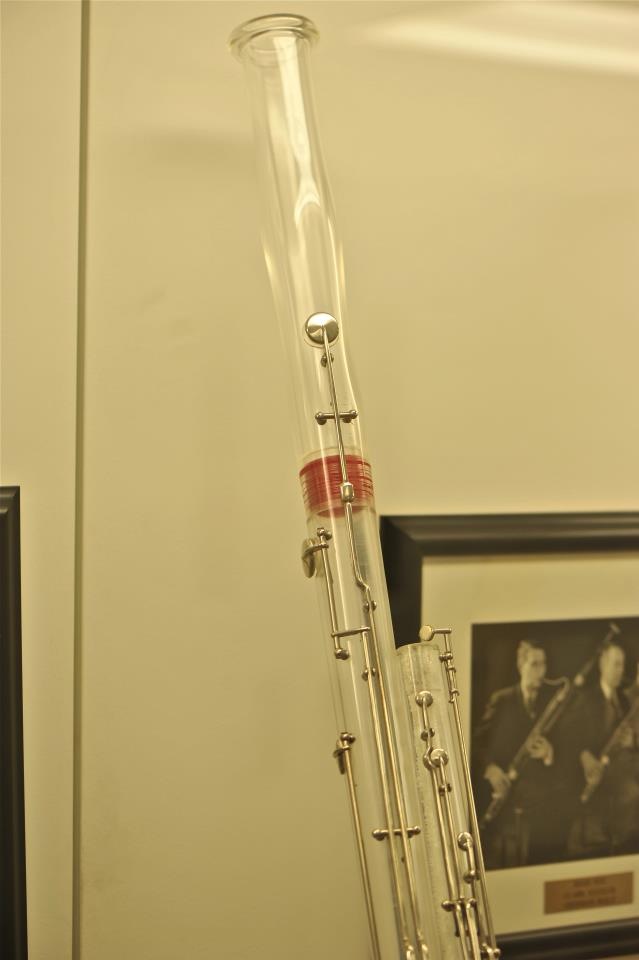
Fox plexiglass bassoon

Fox

Family


Two weeks ago I acquired a French Bassoon. It was found in a middle school’s band room cabinet and had been neglected for many years. There is no manufacturer’s mark, the usual branding spot is the low D guard and this one has been removed. My best guess is either Selmer or Buffet. Also, my time with this instrument hasn’t been true to the period since it lacks a french bocal. Initially I could hardly get any sound to come out of it, I realized that some of the pads near the top of the tenor joint were leaking. So I did a temporary fix by wrapping the pads in plumber’s tape.

The fingering schematic of the lowest tritone is completely different from the German system bassoon. Luckily the Weissenborn method book comes with a full french bassoon fingering chart. After a bit of work, the layout of the low keys makes sense and it is just as fast as the German system. The one consistent problem is the transition from D flat to E flat. The rest of the instrument is very similar to the German system with slight modifications, especially in the highest notes.

I did some research into french bassoon reeds to try and create something that would work well for this system. Most of what I saw was a narrower shape with a longer blade and tube. What I decided to do was to use my regular Fox 2 shaper which is a bit narrow and leave a long blade. I found some great french bassoon reed images on the International Double Reed Society’s website under the “Reed Project” tab. There are reeds gathered from top double reed players from all around the world. I’m not sure if this link inly works from member but here it is.

http://idrs2.colorado.edu/reed/Reeds.html

The tone of the French bassoon is more muffled and nasal. It really reminds me of baroque bassoon tone but with less stability. The instrument doesn’t project as well, it seems stuffy without any “sparkle” to the sound. Also the half step isn’t clearly defined for most of the notes. The pitch center of the basson is very flexible and is stabilized with modified fingerings to bring the pitch up or bring the pitch down. My goal for this instrument is to eventually play the Saint Saens sonata on it and Daphnis and Chloe suite 2.


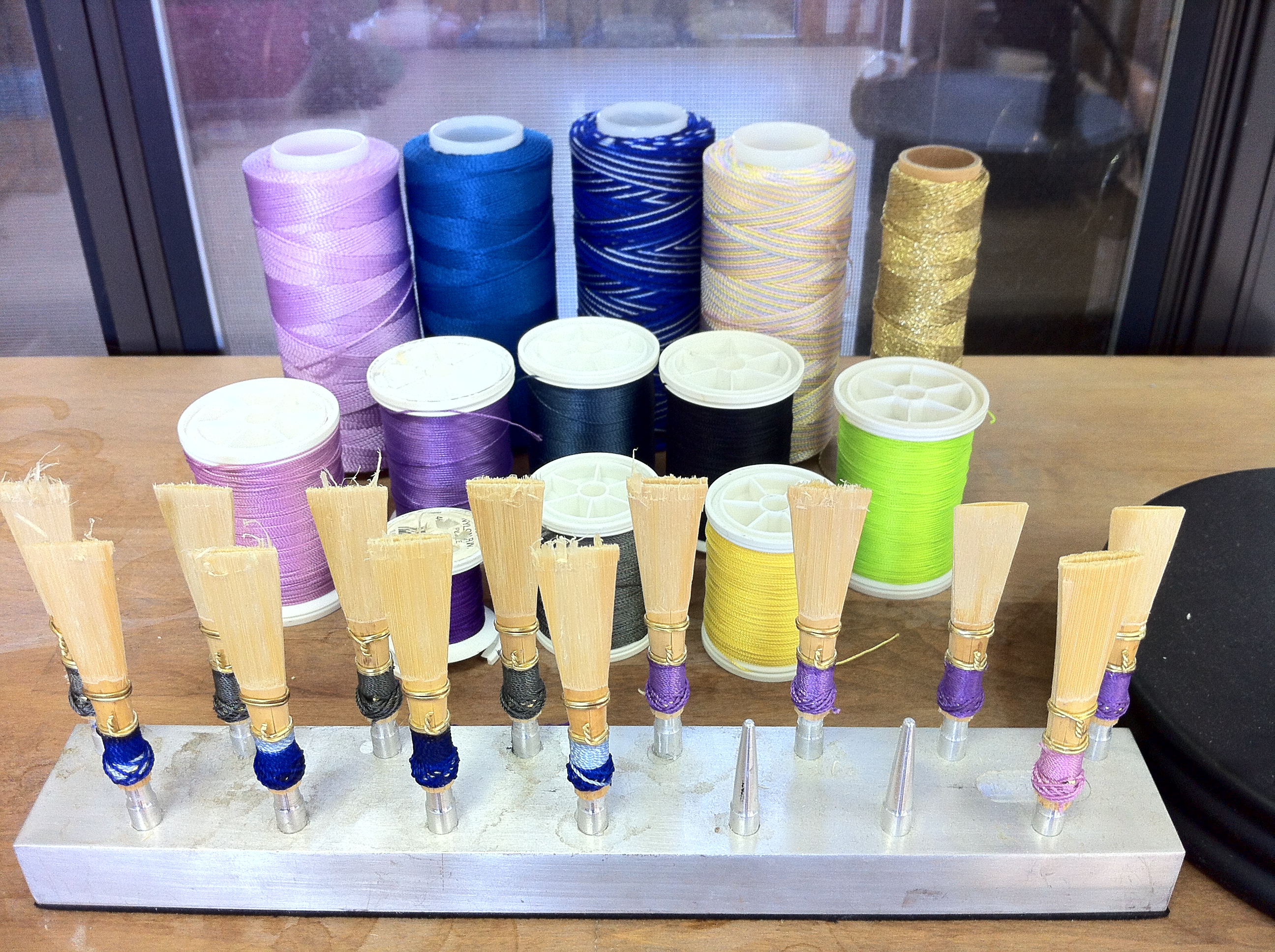
thread collection

Maybe the most fun or visually artistic aspect of making reeds is the wrapping stage. At this stage is where the most (visual) variation happens from reed maker to reed maker. Some people still wrap with traditional thread, heat shrink tubing, glazes like duco cement or nail polish, or even completely unwrapped. In what I have read about wrapping it started as a way to ensure a complete seal of the tube. Now with our very precise shapers (some people bevel) the seal of the tube is not so much a problem. I have also read that reeds that have been wrapped are generally more stable and last longer than unwrapped reeds. I waiver with my finished reeds. I go through periods of months where I don’t wrap. But essentially I DO notice a sound change in wrapped reeds. They last a little longer and the sound is broader.

There are a few different threads to use and some work for oboe as well. For the last few years I have been getting thread from RDG. They have really nice colors an the quality is very good.

Thread

But more recently I’ve been buying Omega Thread. This comes in larger spools and it is slightly thicker so maybe oboe players would not be able to use it. I found my first couple of spools at forrests music with a huge mark up, $7.00

http://www.forrestsmusic.com/thread.htm

However if you look them up in other website it is cheaper. This omega thread is actually a very fine crochet thread and it’s widely available. This site has more colors than forrests and its only $2.80

http://creativeyarnsource.com/omega_nylon_no_2.html

inventory

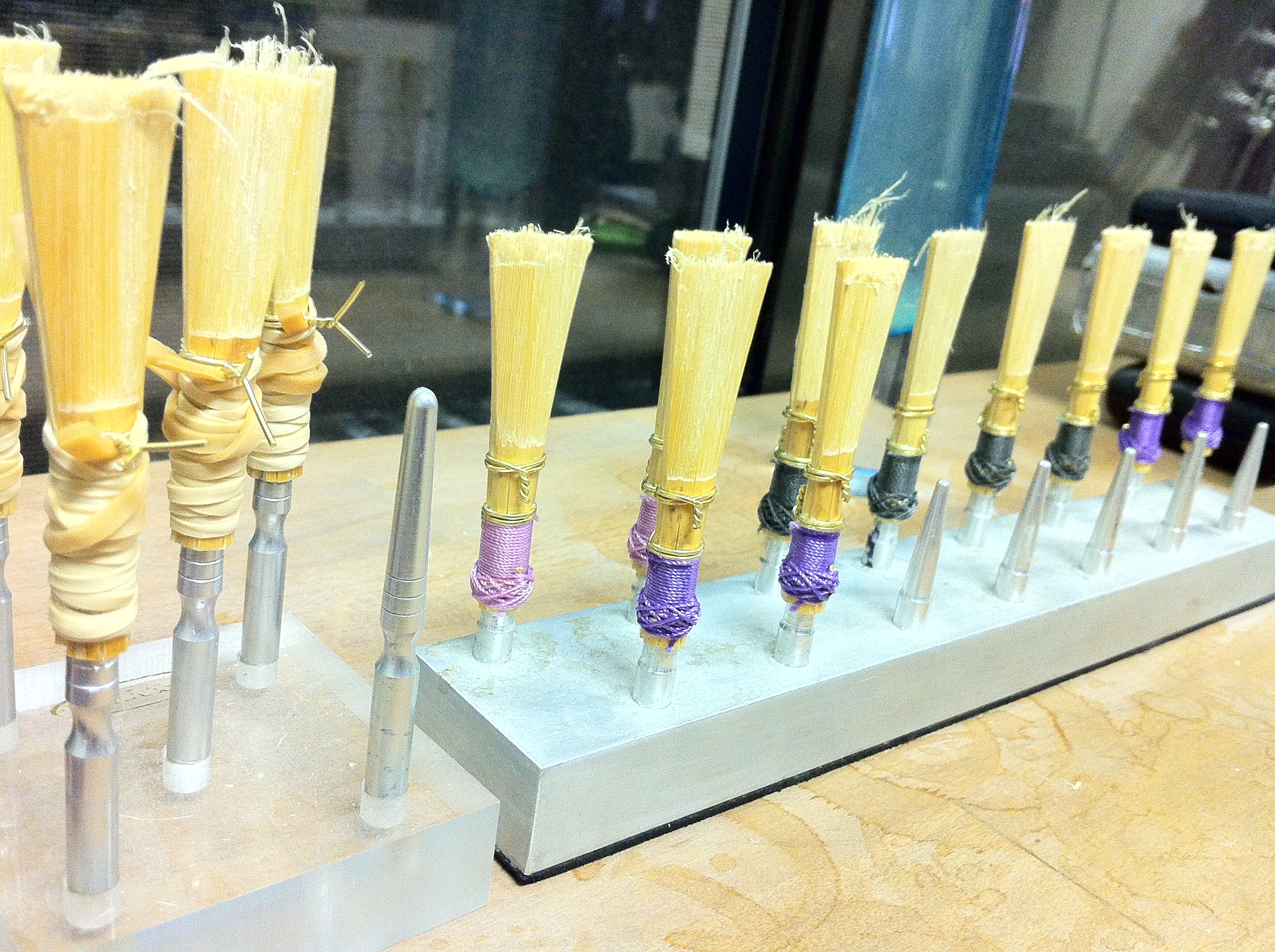
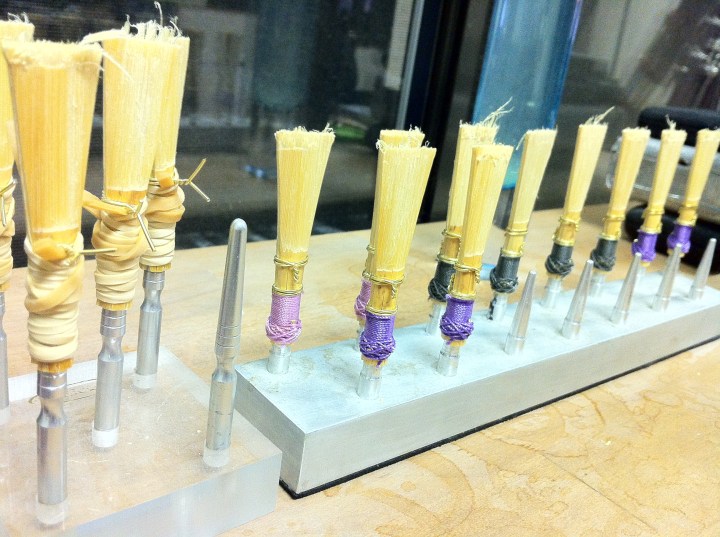
Timing in reed making is essential in creating bassoon tone. Allowing rest between stages prevents the fibers of the cane from becoming stressed. It also seems in my experience that the longer the cane can rest, or the slower it is processed into a reed; the longer the reed lasts.This is especially true of reed blanks. Blanks are fully formed reeds that are still closed at the tip and have not been finished (above right).

So my process is something like this… Self harvested cane needs at least 6-8 months to fully dry out and stabilize. I put it in a big plastic storage bin without the lid and put it in the sun on sunny days.

Store bought tube cane that you split yourself should soak for at least 2 hours. Most people I know soak it over night, but it really just depends on how thick the cane is from that harvest. Just think that the water has to soak in to the very center of the cane so that the gouger doesn’t need to work so hard.

After gouging and profiling cane, I give it a few days to rest. This is the first big step for the cane and it has basically gone from a shoot of plant to a finely measured material. Depending on when I want to have new reeds I plan on letting this cane sit for 7 days, but if I am in a rush more like 4.

Gouged cane or gouged and profiled cane needs an hour to soak before working with it. Then I shape it, score it, fold it over, add a wire, and put it on a pressure peg. These pegs (pictured left) are removable and paired with a handle. Reeds are put on here and wrapped with rubber bands creating continuous pressure to form the tube. This rests for a full day (if you listen close you can hear the snap crackle pop)

Turning this into a blank is just adding two more wires, wrapping, reaming, and sealing. Blanks get better with time and for me I notice a big difference after 5 days of resting. This stabilizes the cane fibers and gives the blank time to acclimate. Also important in making reeds last longer is having multiple reeds to play in turns. Working with a batch of reeds in this way allows reeds to last for weeks instead of a few days.

There are some different techniques that I have read about in curing cane. I read an article in IDRS a few years ago from a bassoonist in texas. He soaks all of his cane in very strong tea. When cane is soaked the water becomes cloudy. These are little particle being stripped off of the fibers and released into the water. His theory was that by already having water fully saturated that it wouldn’t take so much out of the cane.

This is a great article from IDRS that touches a bit more on the preparation of cane in the early stages

https://www.idrs.org/publications/controlled/DR/JNL19/JNL19Cooper.pdf 

photo-9

One of the defining aspects of creating tone on the bassoon is the shape of the reed. Shapers are made by many different companies, and each company offer different dimensions. These design differences correlate to players’ theories about reed dimensions. Some top players even have their own shapes manufactured to unify their own reed style.

Shapers are made of shaper handles and shaper tips. The shaper tips are the pieces with varying dimensions, and many shaper tips can fit into the same shaper handle to process cane. Straight shapers do not require shaper handles and are usually cheaper. For shaping with regular shapers the cane is folded in half and so only two sides need attention. The set back of the straight shaper is that the cane is not folded over and so four individual side of cane need to be cut evenly.

I own three shapers myself; a Fox 2 straight shaper, Rieger 1A, and a Rieger 13. Oddly enough all of these shapes create a 15.5mm tip and play respond best with a blade length of about 27mm.

I would say that a Fox 2 straight shaper is a great shape for people new to reed making. A Straight shaper (black shaper pictured above) is easier to work with because there are no adjustment screws in the way of you knife, and you can shape before or after profiling. This is a thinner shape with narrow throat and tube. This is my go-to shape for high note reeds, however low notes are usually quite sharp.

The Rieger 1A is a very popular shape, and I haven’t met a bassoonist who doesn’t own this shape. Its a great shape for bassoonists who are looking for an all around balanced reed with high notes and low notes. In my experience, this shape can be a bit too bright with a *CVX* bocal. A bright shape with a bright bocal can create a thin sound which lacks much depth.

The Rieger 13 is new to me, it is a copy of the shaper created by the famous American bassoonist K. David Van Hoesen. Many of my favorite bassoonists today studied with Van Hoesen and carry on some of his reed ideas. It has a wide throat and tube which is great for keeping pitch down for most reeds. The shape of the finished blade itself is slightly rounded near the tip. So far I have noticed that this shape has a sweet sound and ages well.

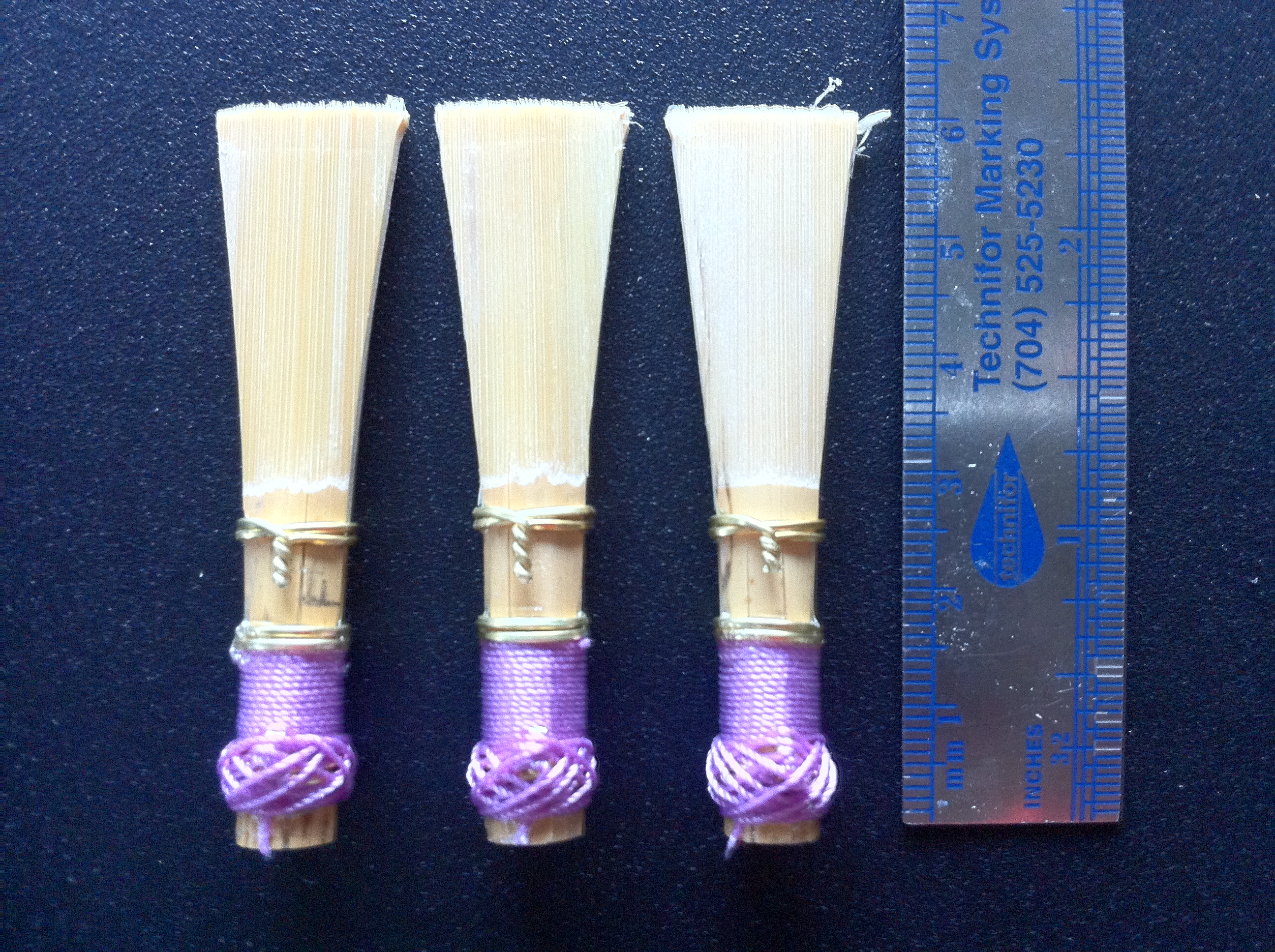
below are three blanks shaped on different shapers.

Fox 2          Rieger 1A        Rieger 13

photo-8

One thing that sets the bassoon apart from other members of the orchestra and even the woodwind family is the price of the instrument. I don’t know a single bassoonist who bought their own first professional instrument. It seems like bassoons are also becoming more expensive, I remember when i was in high school looking at a new Renard 240. 7 years ago they retailed for a little under $6,000, and now nearly $9,000.

I usually thought it was either market inflation or just greedy business owners, but now after having additions done to my own bassoon I can see the amount of work involved. I found a series of videos on youtube about the manufacturing of fox bassoons. This was a video put out by fox a few years ago and posted over a series of videos by someone online. Im sure if anyone had an interest they would already have found these anyways but here they are.

This is the second post from my recent cane harvest. I harvested a bunch of cane from the Ventura river and dried it out. Now it’s time to get to the rest of the cane processes.

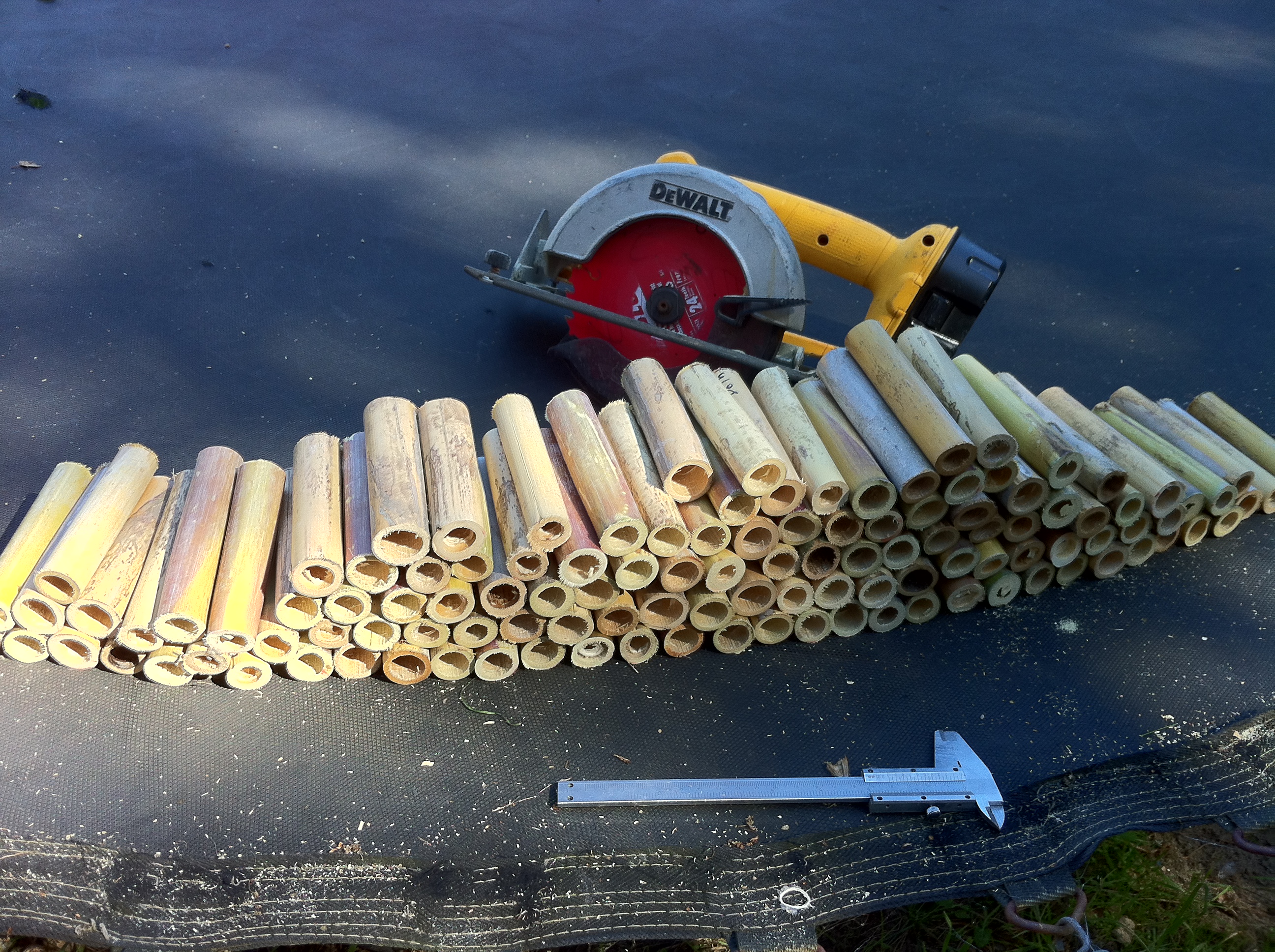
First I cut the “knuckles” out of the cane. These are the connecting sections of the cane that hold the shoots together. Since these knots are unusable it’s import to take them out without removing any extra cane, so I cut as close to the knots as I can.


Cane Cane


At this point all of the cane is free of the joints. This will help all of the sections of cane to dry more evenly. Some of the shoots were in the middle of a stalk of cane, and weren’t uniformly exposed to air.

Now with a caliper, I measure out every shoot of cane and mark the cut. I cut my cane to 120 millimeters because this fits all of my equipment. It’s important to keep in mind that cane continues to shrink as it dries out. So when cutting in the last few stages, its better to leave a millimeter or two extra.

IMG_4723


After all of the cane is cut to size, I store it vertically in a plastic bin. I leave the lid off and rotate it once a week since it is still drying out.

Home grown and harvested tube cane isn’t as pretty as store bought tube cane, but it cane be. Cane companies add a few extra steps like steam cleaning (which also sanitizes) they also sort out pieces with color variations. Home harvested cane isn’t quite as reliable as store bought cane either, not every piece cane be expected to become a good reed.

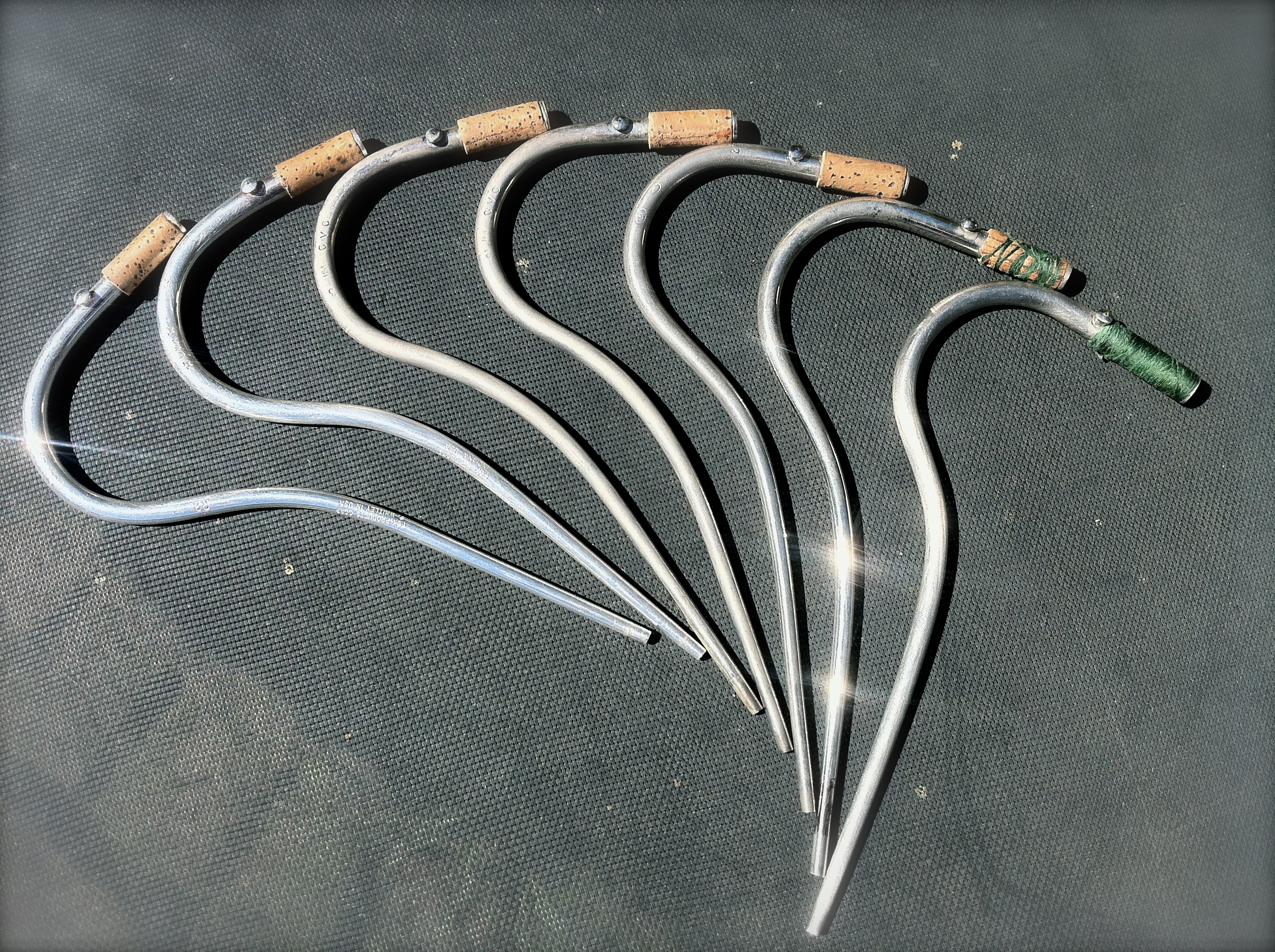
Bocal Collection

Like many players, I am always on the hunt for another bocal. When I was first getting good at the bassoon I was very happy with my sound and then i tried a new bocal and my sound was all of the sudden SO much better. I think that experience created new way of thinking, that there is always a richer more vibrant sound that i can achieve.

So now I have a bit of a bocal collection going. I really only use one bocal everyday and then I have some specialty bocals. I have: Fox *CVX*R2, *CVX*2, CVC2, CVC3, C and then a few no name bocals that came with my student instruments. I am not a very big fan of Fox bocals but when i try a batch of them i usually find a good match in there. Fox bocals have also in my experience been the most consistent. I have had a few used Heckel bocals sent to me on consignment and there is a drastic different between two bocals of the same model.

I purchased a Fox *CVX* R2 last spring and so far it has been the best bocal I have paired with my Fox 601. It has very little resistance and great pitch control for low notes. The high notes are a little harder to get out than on my *CVX*2 which is the only reason i have a *CVX*2. My two CVC bocals came with my current bassoon and for me they aren’t as vibrant as i would like them to be, they tend to be a little muffled and don’t have the high notes.

I am VERY lucky to work down the street from Forrests Music. After work or on lunch breaks I often go over to test used instruments and bocals. I have gotten the chance to try out the Paraschos bocals and the Leitzinger bocals.  The Paraschos bocal comes in two forms, one as basically solid wood and the other lined with metal. In my experience the Paraschos lined with metal seems to be more resonant and the solid wood version muffles my sound. These bocals are also new so I’m not sure how long their live expectancy is (cracks etc.) Now the Leitzinger bocal is another recent addition or at least in the last few years. There are so many different specifications for these bocals; alloys, length, bend, plating and taper. I haven’t gotten to try all of the different options by far but for the few bocals I tried they seem to be very open and vibrant. Easy playing in all ranges but again i think certain models are better suited for the highest playing. Id seriously consider a Leitzinger as my next new bocal.

Last week I tried the Leitzinger bassoon as well, it seemed to me like more of a gimmick. Like they have great bocals and now they made a “bassoon to match.” It’s priced “competitively” at $24,000. I only got a few minutes with one, and I know that we are all used to our own instruments but the pitch and projection wasn’t even as good as a Fox 240. The f# and g# keys also must have been drilled incorrectly because anything involving those two keys was uncontrollably sharp and had far too much resistance.

These bocals can be found new or used (on consignment):

http://www.forrestsmusic.com

http://www.rdgwoodwinds.com

http://www.charlesmusic.com

http://www.millermarketingco.com