Contrabassoon Gouged Shaped and Profiled cane is now available at


This contraforte is rentable! I have been so lucky in the last few years to get some great gigs but I can’t do every one of them. Many times there are enough bassoon players in the section to cover all of the parts but no one has a contra. So I rent out the contraforte on a short term basis. To rent the horn I need a few weeks notice and the player is required to come to the house for a brief lesson on assembly and maintenance. The rental is for use in California only, pricing is based on the project.
If you are interested in renting the contra just send me a message through the “connect” page


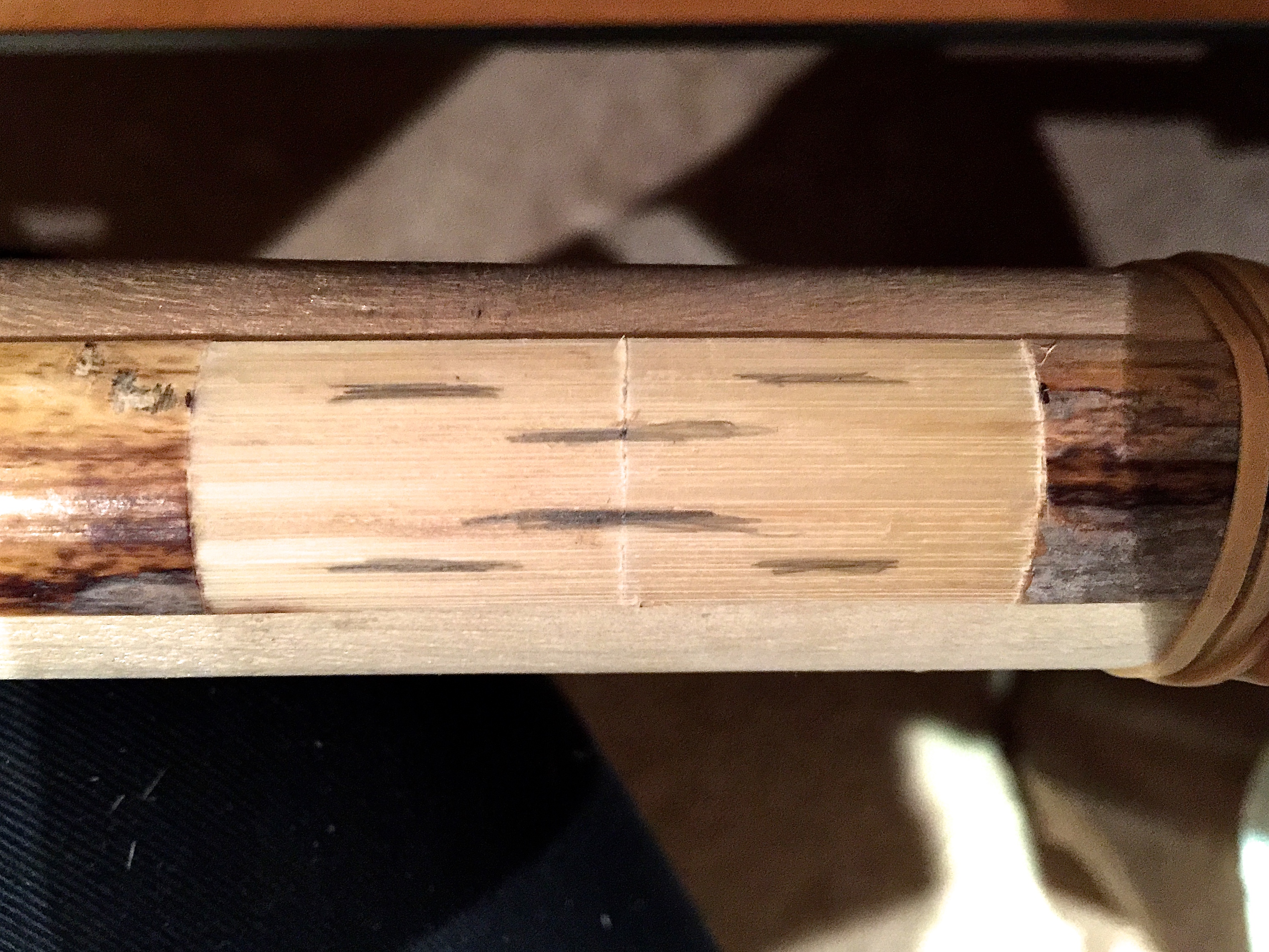


This is a post that I have dreaded doing for a long time. I debated whether this was necessary and useful to people, or if it would just be obnoxious. I realized that when I myself was buying reed tools there was very little information on a consumer level about how these machines stacked up against each other. If I was starting all over again in buying reed machines, I would have liked to have seen more information about them. So that’s the basis of including this aspect of my reed desk equipment.
Reiger Bassoon Gouger
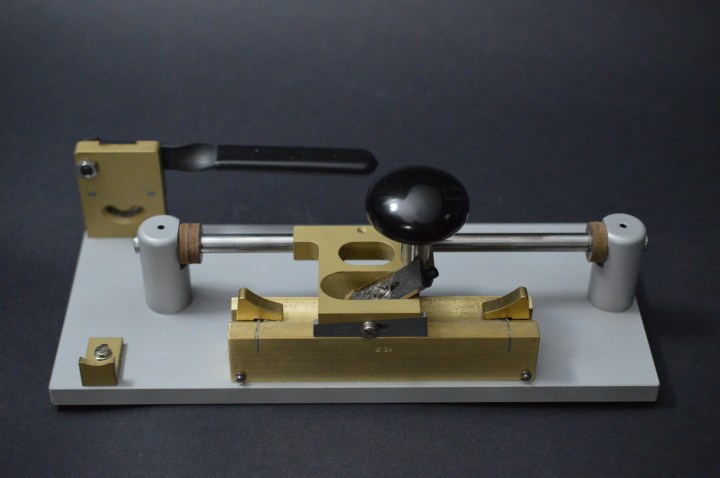

This gouger was a recent acquisition, it was a graduation gift from my uncle. Outside of this gouger I have only used the Reeds ‘n Stuff gouger, and I do really prefer the Reiger. The guillotine (which is included, and a big reason for choosing this machine) is very easy to use and cuts to a perfect fit to the cane bed. Once the cane is at that 120mm length, it fits right into the cane bed and never slips out. I have had some problems with other gougers where the cane jumps off of the machine once you use a little strength.
Berdon Bassoon Profile


This machine is an ANTIQUE! It is very old and I found it on eBay from an oboe player who had it in his closet for a few decades. This machine represents a very simple single barrel profiler with two basic adjustment screws, a removable blade, and no measurement systems whatsoever. There are many simple machines like this still being done by a few companies. What I like is that it is very easy to use, easy to remove the blade to sharpen myself and easy to adjust. I don’t like that when I adjust the profile I have to waste a few pieces of cane on trial and error experiments with no way of knowing what my current settings are. I found this for $300 and it works great, if you can find a cheap simple profiler you can probably get a good blade fit to it and get it working. Otherwise I would suggest finding something newer and more sophisticated.
Reeds ‘n Stuff Tip Profiler
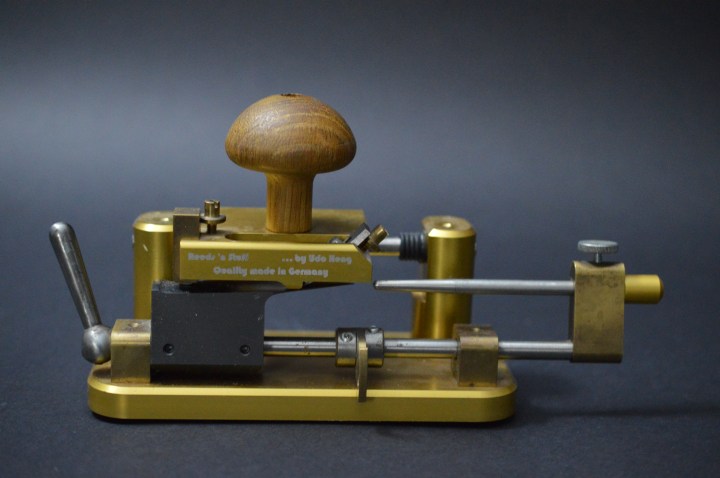

This tip profiler I also found used. This is the only thing that I own by Reeds ‘n Stuff and I’m quite sure that he now makes a fancier version of this. However this is very similar to the Reiger tip profiler and it makes all reed finishing a dream. Every tip is the same every time. I cannot enough stress how much this machine changed my reed making and my consistency of sound. I know that they also make oboe tip profilers, that is most of what I hear oboe reed makers complain about is creating an even tip. I have also had some luck using this with contrabassoon reeds without even having to adjust it. If I just put the reed on and keep it a few millimeters shy of the guideline, I get a great tip.
Reeds & Tools gouger
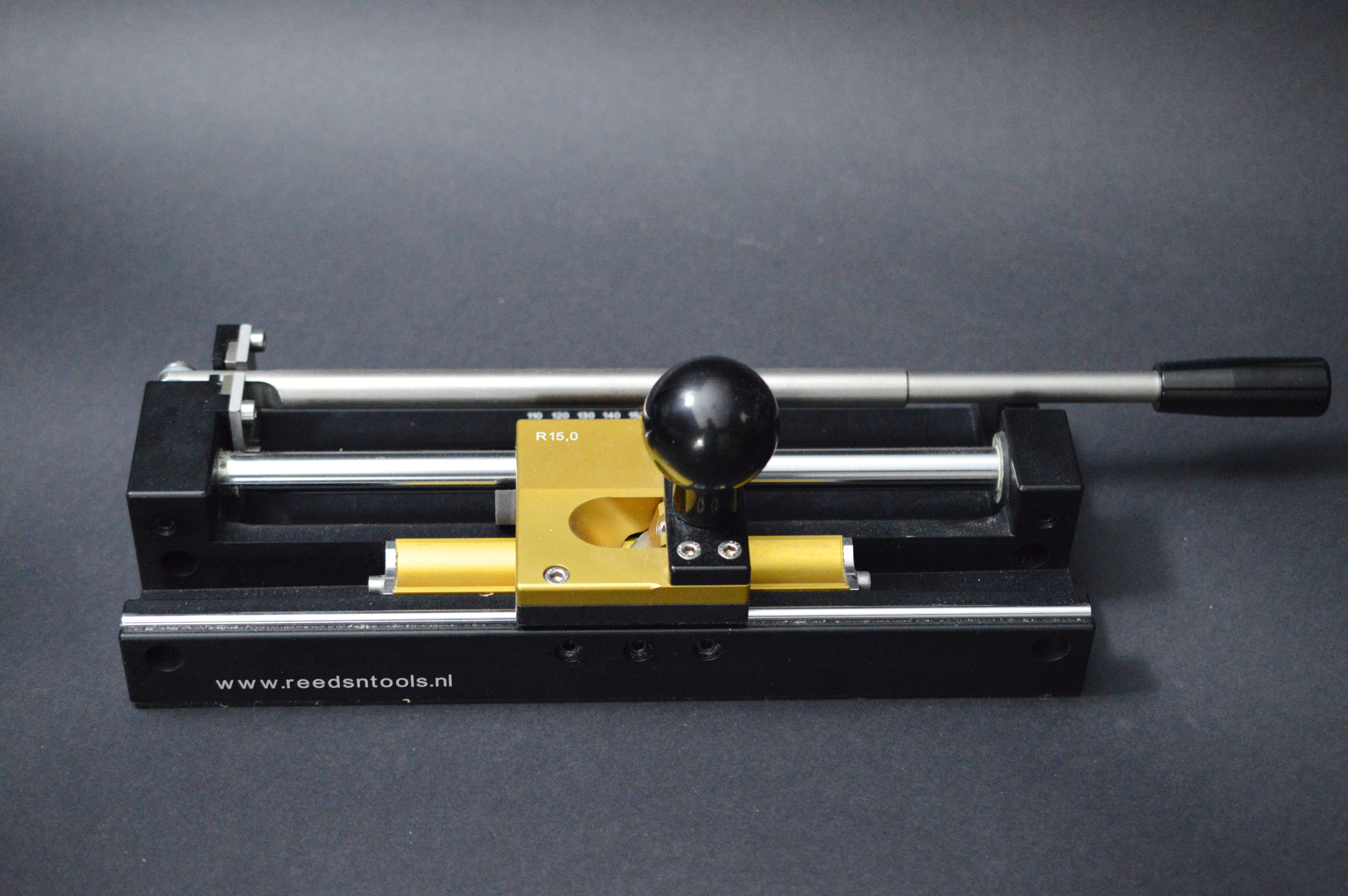

These Reeds & Tools machines are my newest additions, just over a month old. They represent the fanciest machines with flexibility and technology and controlled results. The gouger I currently have set up for processing contraforte cane, this means that I am using a 160mm long 30mm diameter cane bed with a 30mm diameter blade. The cane beds on this machine are interchangeable, so I also have a contrabassoon length bed (150mm) that I can slide use. I also have a 28mm diameter blade and carriage If I want to have eccentrically gouged cane instead of concentric. This machine can also fit a bassoon cane bed, so for doublers who only want one machine to process both instruments’ cane this may be a good choice. Again the guillotine has been great and the bed hold cane firmly.

This is an example of the gouge from this machine.
Reeds & Tools Profiler

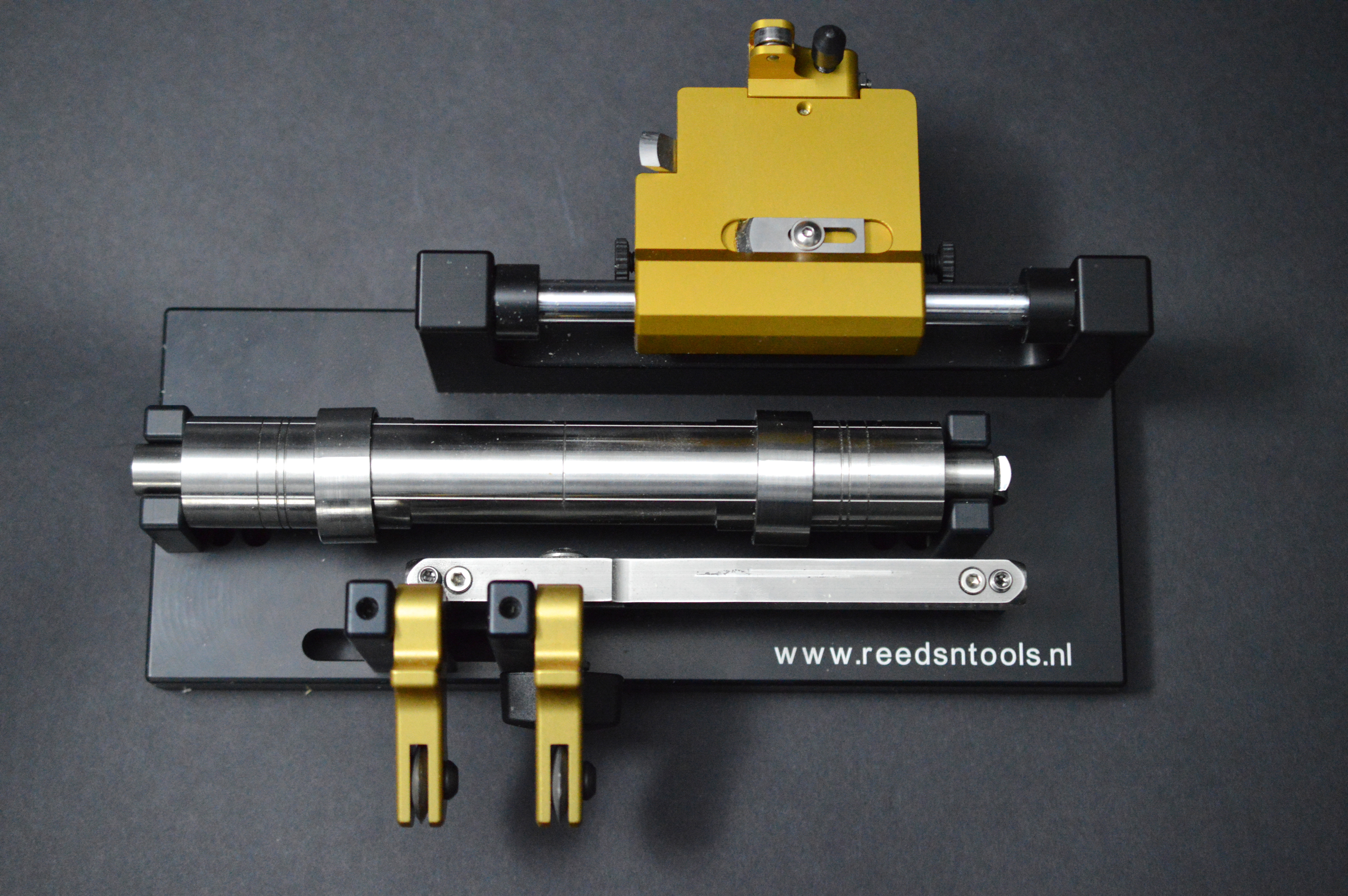
This machine is a blast to use! So easy and fast. I have two scoring blades so I can score the collar and the center line of the cane. Chris van O’s was also nice enough to include a spare blade and a dial indicator for adjustments. Unlike my bassoon profiler, this machine has it all. I can accurately change my profile by hundredths of a millimeter by using the attachable micrometer…

This pair of machines make cane processing fast and accurate, and I would recommend them. So far Reeds & Tools is the only company making equipment for contraforte. The machines that I have are for cane up to 160mm in length but he is also making machines at 170mm and 180mm for contraforte player who want to experiment with longer tubes or blades.
This is the second post from my recent cane harvest. I harvested a bunch of cane from the Ventura river and dried it out. Now it’s time to get to the rest of the cane processes.
First I cut the “knuckles” out of the cane. These are the connecting sections of the cane that hold the shoots together. Since these knots are unusable it’s import to take them out without removing any extra cane, so I cut as close to the knots as I can.


At this point all of the cane is free of the joints. This will help all of the sections of cane to dry more evenly. Some of the shoots were in the middle of a stalk of cane, and weren’t uniformly exposed to air.
Now with a caliper, I measure out every shoot of cane and mark the cut. I cut my cane to 120 millimeters because this fits all of my equipment. It’s important to keep in mind that cane continues to shrink as it dries out. So when cutting in the last few stages, its better to leave a millimeter or two extra.
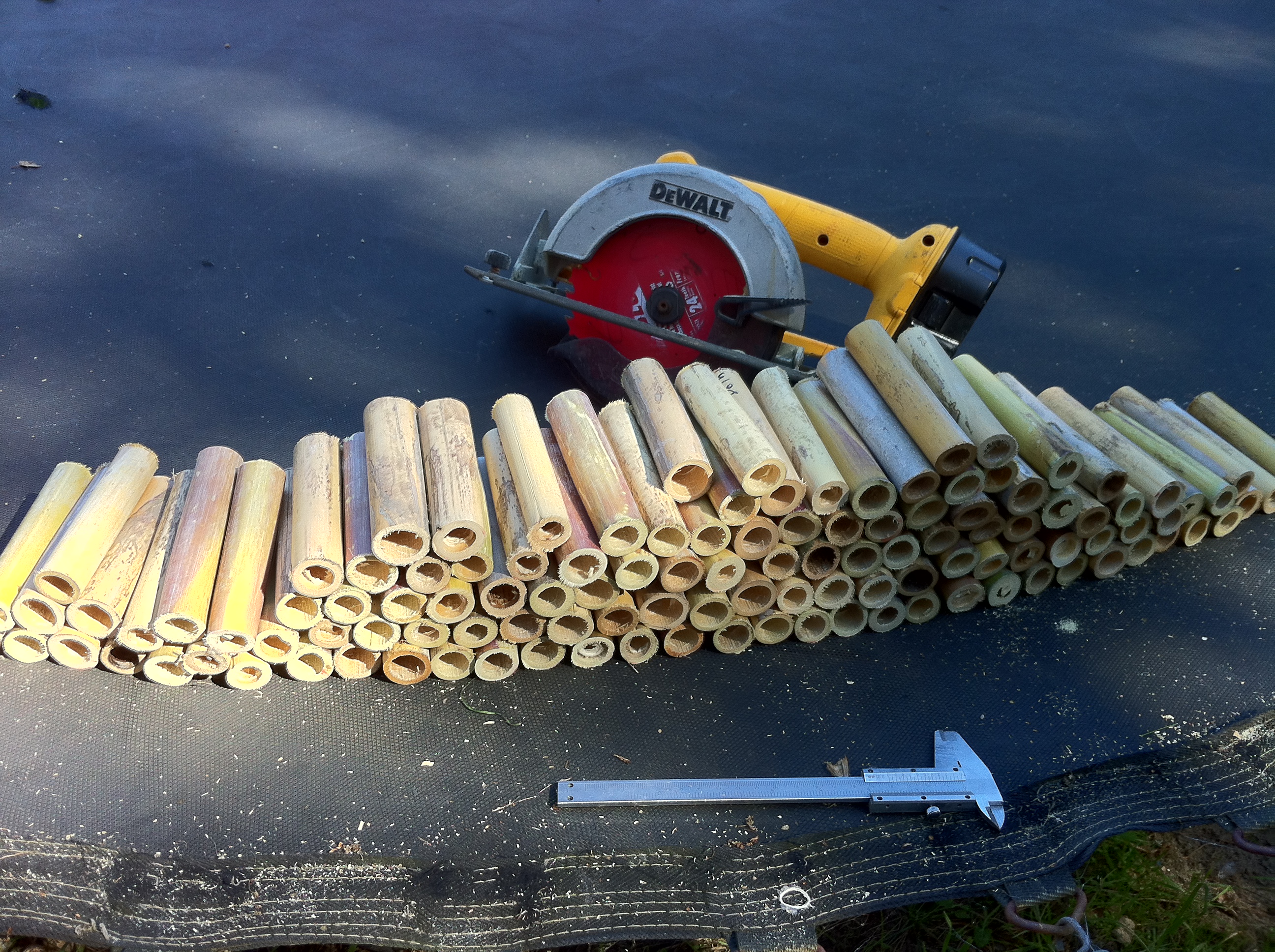
After all of the cane is cut to size, I store it vertically in a plastic bin. I leave the lid off and rotate it once a week since it is still drying out.
Home grown and harvested tube cane isn’t as pretty as store bought tube cane, but it cane be. Cane companies add a few extra steps like steam cleaning (which also sanitizes) they also sort out pieces with color variations. Home harvested cane isn’t quite as reliable as store bought cane either, not every piece cane be expected to become a good reed.

 Kristopher King