Legere has been making some great bassoon reeds! but they left out us contra players. So this is a video on making plastic reeds from a commonly found item, a Slurpee!
contraforte
Renting the Contraforte

This contraforte is rentable! I have been so lucky in the last few years to get some great gigs but I can’t do every one of them. Many times there are enough bassoon players in the section to cover all of the parts but no one has a contra. So I rent out the contraforte on a short term basis. To rent the horn I need a few weeks notice and the player is required to come to the house for a brief lesson on assembly and maintenance. The rental is for use in California only, pricing is based on the project.
If you are interested in renting the contra just send me a message through the “connect” page
Tangential Bassoon
I was recently talking to my neighbor about what I do, and it turns out that he used to be a clarinet player. He said that he didn’t continue on to a professional level because he needed to invest so much in equipment. To be a pro clarinet player, he said, he needed to buy a whole family of pro clarinets and he just wanted to play Bb soprano clarinet. So this got me into talking about the bassoon tangents that people get into, in a professional or sub-professional way. Every bassoon player plays bassoon for a while and then there are a few different directions to go experimenting.
Probably the most responsible secondary horn is contrabassoon. This is very practical since it’s also used in the orchestra and most bassoon teachers can help with it. The only obstacle with contra is getting access to one since they are expensive and unpopular. As a student in college it’s becoming standard to take out extra loan money to finance a new instrument, but usually graduate programs are more lenient on addition loans.
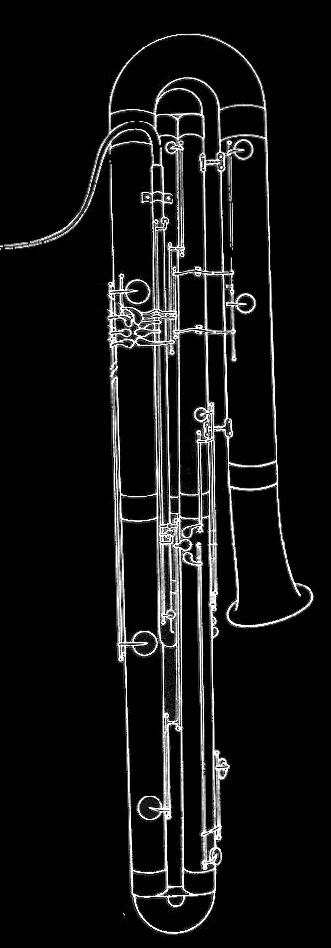
French Basson is mostly dead at this point. People play them out of curiosity and on a hobbyist level. I had one for many years and I was never tempted to take it to a gig instead of a Heckel system bassoon. That being said, french bassoon can be a cool thing to pull out on a recital or for chamber music. My high point was being able to play the Saint-Saens Sonate on it, but it never made it out to a recital. This scratches the itch of wanting to play a historical instrument but its also pretty easy to learn.

Baroque bassoon is another route that some players go. Baroque orchestras are becoming much more popular in California and New York, and so there are maybe a few more gigs for baroque players on top of regular orchestra gigs. Baroque is much more difficult to play well and isn’t as pleasing to listen to unaccompanied, so learning it can be tedious. When I have done “baroque” orchestra gigs, it usually ends up being some sort of mixed ensemble. The woodwinds and principal strings play baroque instruments, but the rest of the strings play on modern setups. I am not a baroque bassoon player but I do sometimes want to play historical literature on the authentic instruments. Baroque bassoon are also much much cheaper than modern bassoons.

The bassoon has recently been modernized even further with the addition of an electric pickup. With a modified bocal, players can plug into an amp and use the same filters and effects that an guitarist can use. There are so many great electric players but not so many gigs. This isn’t so much a career path as it is a way to bridge the gap and get into jazz or rock etc.
Contrabassoons of the World!
It’s so amazing that we live in the age of youtube and world wide web! We are able to hear what different players sound like all over the world, the differing styles and tones of certain players. Contrabassoon is especially interesting because I don’t think that contrabassoon tone is uniform throughout most cities! Thanks to players uploading footage and interviews we are able to hear from a wind section that we wouldn’t normally have access to. These are a few clips featuring players around the world.
Amrei Liebold, Orchestre de Paris
Luke Whitehead, Philharmonia Orchestra
Dominic Morgan, London Symphony Orchestra
Lewis Lipnick, National Symphony Orchestra
Jaap de Vries, Netherlands Philharmonic Orchestra
Gregg Henegar, Boston Symphony Orchestra
Stravinsky’s Soldier’s Tale in LA

The Southeast Symphony (including me!) is putting on a production of Soldier’s Tale by Stravinsky. I invite anyone and everyone to come out and see it, this Thursday at 8pm. The address is on the above postcard, and you can purchase tickets beforehand at ticketpeak.com
Soldier’s Tale is a piece for Chamber orchestra, actors, and dancers. The story is based on the Russian folk tale “The Runaway Soldier” which is about a soldier’s encounter with the Devil. The work heavily features the violin which is a large part of the story.
Our performance was video recorded and is now up on youtube!
Contraforte Range
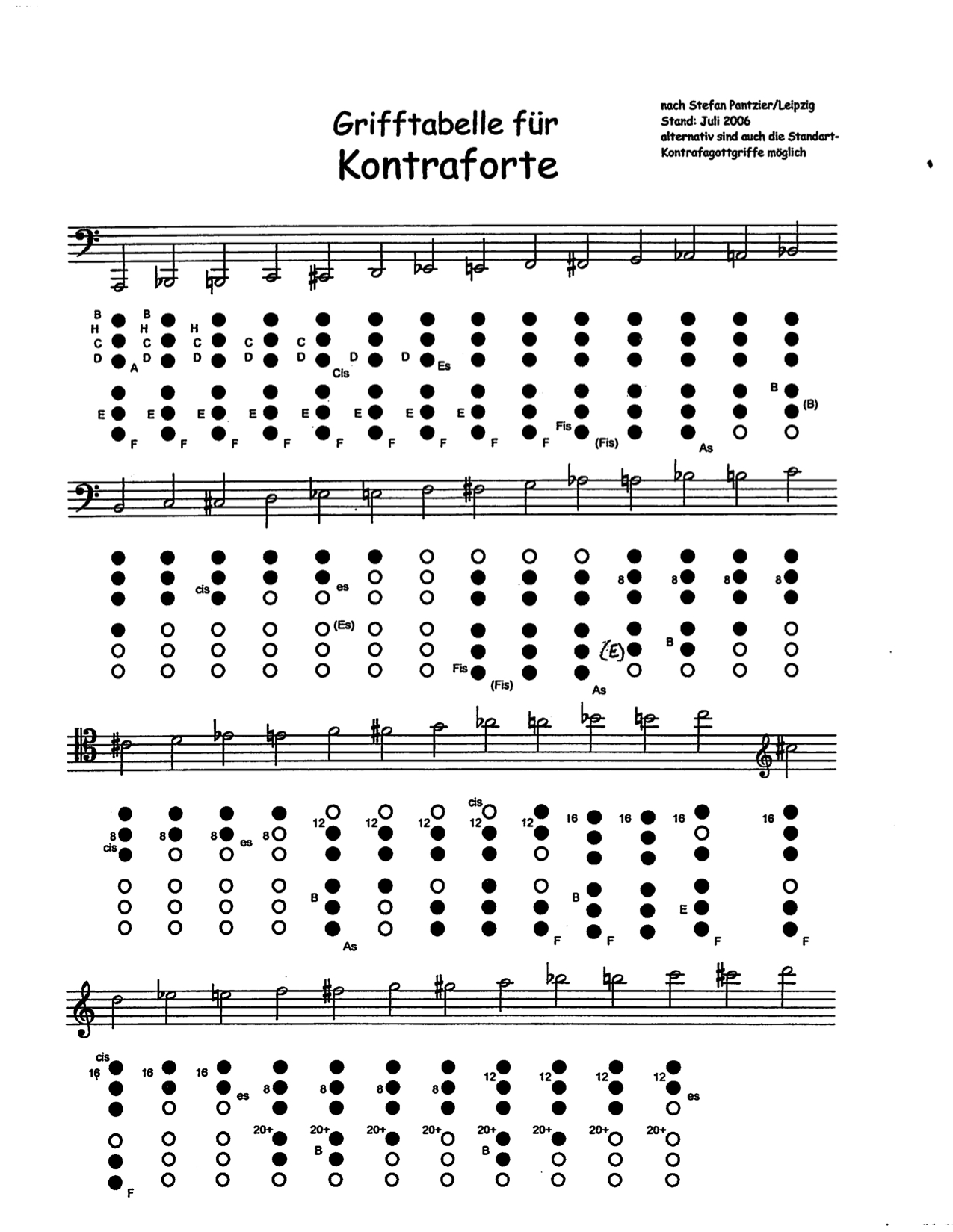
The usable range of the Contraforte is from A0-C5. This is an improvement on the contrabassoon range by a few steps. Although I know some very talented contra players that can play almost as high as any contraforte. Im mostly posting this so that composers are able to hear the timbre change of the different registers.
The Contraforte does not have a dependable high D but it is possible. Here I play the opening bassoon solo from Stravinsky’s Rite of Spring, at actually pitch. I used an extremely thick reed with a lot of resistance.
Thomas Adès and the San Francisco Symphony
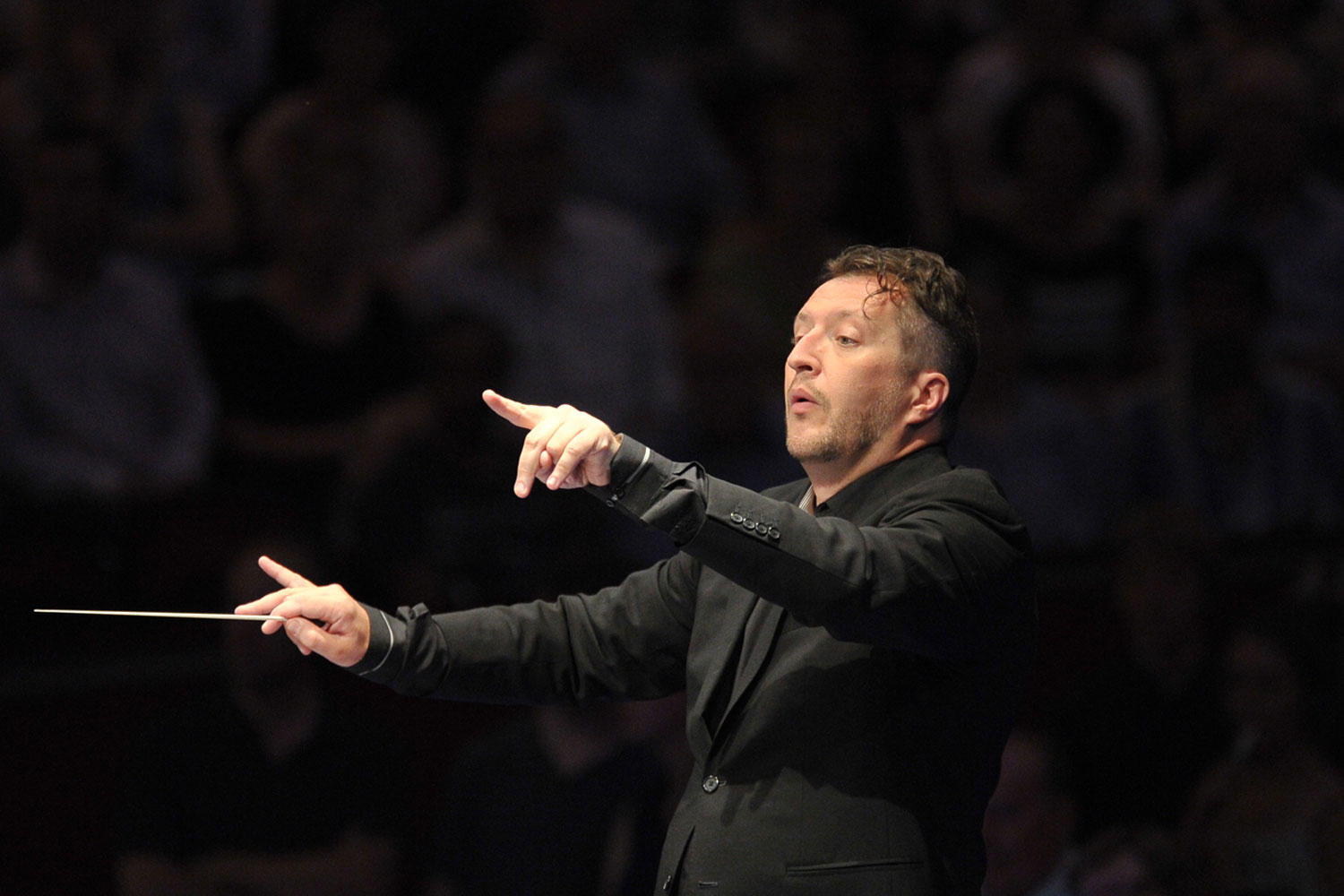
This weekend (March 5,6,7) Thomas Adès with be conducting his own composition with the San Francisco Symphony. His piece “In Seven Days” is based on the seven days of creation outlined in the book of Genesis. It is a multimedia piece including video projection and he scored it using a contraforte!
Bay area people should all go and hear some contraforte in Davies hall!
SF Symphony Tickets
This is the first time that contraforte has been used in the San Francisco Symphony and it will be performed by Steven Braunstein.

 Here I am visiting the Contraforte tamer
Contrabass Instruments
Contrabass versions exist for almost every instrument now. Most of the newer instruments are scarcely written for and are mainly used in new music. There are a few newer companies making wind instruments that can go lower and lower. Eppelsheim makes my contraforte, as well as a very well received contrabass clarinet, tubax, and contrabass sax. Hogenhuis is popular making contrabass flutes.
Contrabass Recorders
Contrabass Flute
Contrabass Clarinet – Eppelsheim
Contrabass Saxophone
Subcontrabass Tuba
Octobass
Green Reed!?

I tried an experiment last week involving a Green Reed for Contraforte. I just harvested some cane in early January and decided to try to immediately make a reed out of it instead of letting it dry. And this is what turned out! I regular reed that sounded and acted like any other reed but it was fresh green cane and didnt need to be soaked in water before I played on it. The texture was similar to a very hard piece of cane so I had to make this thinner than I would normally. After a few days it started to dry out and warp and is now is playing very sharp. Next I’m going to try this on regular bassoon.
I would suggest trying it to all of the cane harvesters out there!
Practicing Difficult Passages
Sometimes as professional players we hit road blocks in our repertoire. As good as we think we are, and as prepared as we may be, there will always be a passage lurking out there which will require some work. So much of being a bassoon player is about playing in an appropriate and handsome way and blending with an orchestra. I have recently chosen a piece of music for an upcoming recital that is pushing my limits, I will be playing the Franck Cello Sonata on Contraforte. The recital is in about three months and I have in working on this piece for the last three weeks. At this point all of the “fun music” has been rehearsed as much as it needs to be and the technical passages now need to be “woodshed.”
 (I had to repair some of the slurs)
I chose the Franck Cello Sonata because it really shows off the upper register of the Contraforte. I’m finding that I’m able to play extreme high note passages in an easier way than on the bassoon. This passage that I selected is one that I am finding to be particularly difficult to get up to tempo. It is getting better each day, but I think it is only due to switching up my practice techniques and thinking about the note groupings in new ways.
For this passage the beginning of measure 4 is a tricky spot, mostly this has to do with the fingering system on the Contraforte. These are the ways that I use to practice it:


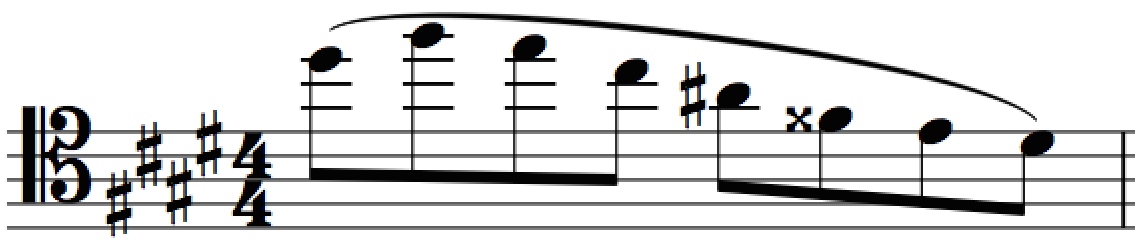
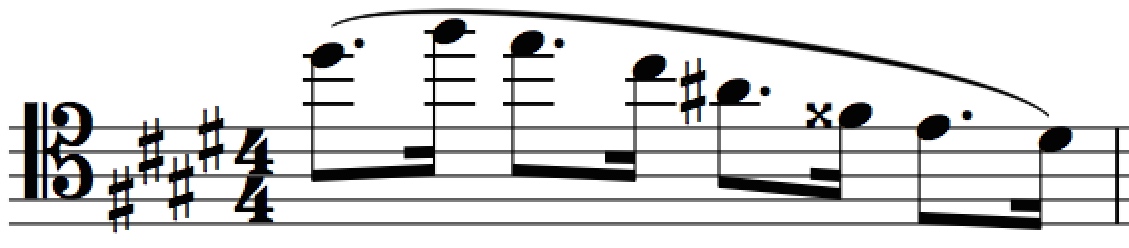
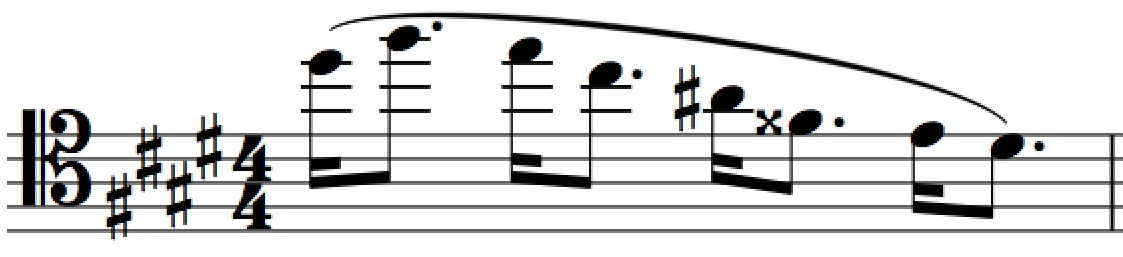
These are the ways that I first use to learn a difficult spot of music. If after a few days the passage is still unplayable then I use a few different rhythms to add in. As a side note, I find practicing to be stressful. By micromanaging difficult passages like this, one can create “baby steps” that are achievable everyday. These rhythm studies are a way of taking the notes out of musical context and playing them as a mechanical technical exercise.


This second set of excercises is designed to focus on the notes. These help me when I am having trouble concentrating, or am practicing in the morning and still half asleep. Playing staccato isolated notes is a memorization technique. The sixteenth slurred pattern isolates the finger movement between the notes, I try to have “lightening fast” fingers. Play the note full length and then move to the next fingering as fast and efficiently as possible.
Some other things that I try to keep in mind when I practice, in order to make my sessions as efficient as possible…
-Have a good reed
-Warm up with both long tone and technical exercises
-Have a tuner and metronome on whenever you are playing alone
-Don’t allow yourself to get away with cracked notes or sloppy fingers

 Kristopher King