Kris's Reed Desk

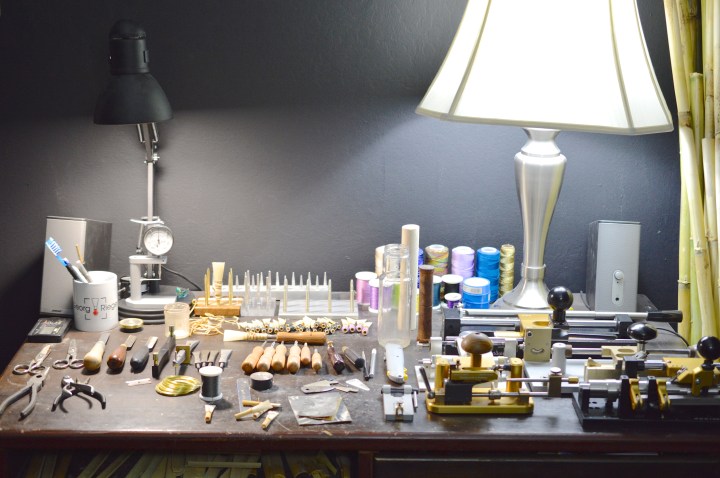
The next few entries that I would like to post have to do with my reed desk. I firmly believe that the quality and reliability of someone’s reeds is directly affected by the quality of their reed tools. Generally I have found that people who have great reeds on a daily basis without any “reed panic” days tend to have great reed tools that are sharp and in adjustment.

I would like to post a few entires on a consumer level giving detailed reviews of some of my machines and products. This will be bassoon, contrabassoon, contraforte, or general purpose double reed equipment. I have no affiliation with any company but have chosen my equipment based on reviews, function and the recommendation of my teachers.

20140113-202628.jpg

I just bought a Snark tuner to try out. Many of my colleagues have it and they have nothing but positive things to say about it. I have had clip on tuners before, or at least an extension to plug in to my regular tuner.

The Snark is very quick and responsive, there is no lag time waiting for the tuner to focus on the pitch. There are settings to either pick up vibrations directly from the instrument or to pick up sound through the microphone. The pitch level can be calibrated from 415-466.

This tuner is great for bassoonists because it can easily clip onto the bocal, or onto a oboe/clarinet bell. I actually purchased this tuner for my contraforte and like most tuners it cannot register the lowest octave. That would be my only drawback.

One thing that sets the bassoon apart from other members of the orchestra and even the woodwind family is the price of the instrument. I don’t know a single bassoonist who bought their own first professional instrument. It seems like bassoons are also becoming more expensive, I remember when i was in high school looking at a new Renard 240. 7 years ago they retailed for a little under $6,000, and now nearly $9,000.

I usually thought it was either market inflation or just greedy business owners, but now after having additions done to my own bassoon I can see the amount of work involved. I found a series of videos on youtube about the manufacturing of fox bassoons. This was a video put out by fox a few years ago and posted over a series of videos by someone online. Im sure if anyone had an interest they would already have found these anyways but here they are.

practice

For all orchestral musicians and music students it is well known that late february/early March is school audition season. This is the time that all of the music schools hold auditions for instruments to determine who will be attending the next fall semester. I am now applying for grad schools and am right in the middle of a few auditions. I took an audition at the New England Conservatory two weekends ago and this weekend will be the Manhattan school of music and the Juilliard school. Now all of the school ask for some similar pieces but some are a little different. For example at Juilliard and NEC I am applying for a bassoon performance degree, where as at MSM I am applying for an orchestral studies degree. So Juilliard and NEC are asking for more solo repertoire and MSM is more a bunch of orchestral excerpts. I graduated from my undergrad last spring so i have enjoyed a few months of to prepare for these auditions but even still there are VERY talented people applying for these degrees and I’m excited just to hear some of them and see the schools! here are the lists

Manhattan School Of Music

Orchestral performance degree

Solo Works

Mozart Concerto, K. 191.

Hindemith sonata

Excerpts

Beethoven Symphony No. 4, last mvt.

Mozart The Marriage of Figaro, Overture

Stravinsky The Rite of Spring, opening solo

Ravel Bolero

Ravel Piano concerto

Rimsky-Korsakov Scheherezade, solo & cadenzas

Tchaikovsky Symphony No. 4, mvts. 1,2 & 4

Tchaikovsky Symphony No. 6, mvts. 1 & 4

Juilliard


Two complete works of contrasting styles and periods; one must be a concerto.

Four or more standard orchestral excerpts.

Mozart

Saint Saens

Scheherazade

Ravel piano Concerto

Bolero

Tchaik 4

Brahms 3

New England Conservatory

Graduate:

Two contrasting movements from a Baroque, Classical, or Early Romantic sonata or concerto.

Mozart

Two contrasting movements from a Classical or Romantic sonata or concerto.

Saint Saens

Two contrasting movements from a contemporary sonata, concerto, or unaccompanied piece (or a one-movement work in its entirety).

Hindemith

Four orchestral excerpts of your choice.

Scheherazade

Ravel piano concerto in G

Bolero

Tchaikovsky 4


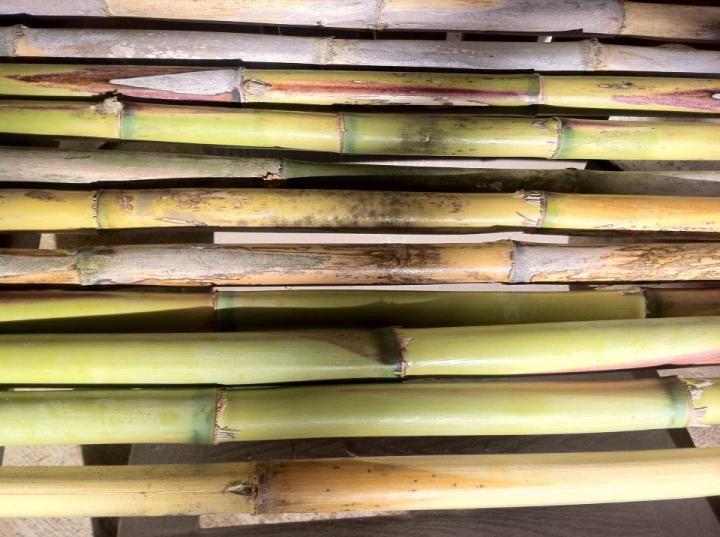
I have the great advantage of living by a field of naturally occurring Arundo Donax. My mother lives in Ventura, California and the Ventura river, from the Ojai river, is infested with an unending source of cane. The easiest place for me to collect this cane is where the river meets the Ocean. The is however a problem with this cane, since it grows basically on a beach, it is very weathered and dry. From what I have experienced so far, much of this damaged cane makes very soft reeds. The sun, sand, salt, wind, humidity, and temperature take much of nutrients from the cane and leave it very porous and soft. The best cane is in the middle of the fields, so it takes a bit of work to get to, but this cane is the most protected.

All of the pieces I have cut are in different phases of the drying process. I have read many articles about the drying process and what some of the big cane producers do. First I have read from two separate sources to harvest cane the day after a full moon. “the pitch is up” and something about the gravitational difference of having the moon high in the sky during the day pulls resources from the roots into the fibers. From there on the process is very different company to company. Most french companies keep the cane outside to dry in a “teepee” formation for a whole year. Where as the Rico company keeps the freshly harvested cane outside in the sun for 10 days and then moves it all into huge indoor storage facilities and large ventilator fans.

For my part I am going to harvest enough cane to allow me to try a number of different methods. Some I will leave outside, others will stay mostly inside, and others I might cut to shorter segments to see if it will dry faster. Most of the pieces I cut are 5-6 segments long and so ill have different sections of the same cane to work with.

Ill be sure to post pictures of the reeds made from this harvested cane!

481428_4644506303615_499657917_n

I am down in Carmel and have been for the last three weeks. We are doing a production of La Boheme, however this has been reduced from a full orchestra to a 9 piece pit orchestra! As the bassoon I am covering many of the orchestra parts and I don’t get much as far as rests.

Overall it has been a very fun experience and I hope I get called again for this next year!

20120914-185404.jpg