Dvorak’s Serenade for winds is a piece that doesn’t get programmed enough. There is a whole catalogue of repertoire for large wind chamber ensembles that mostly goes unplayed, this work is one that gets a little more attention.

There are two passages of running sixteenth notes which originally trade off between bassoon, cello, and clarinet. I changed the voicing of this material to make it more bassoonable.
Dvorak Serenade Bassoons pdf

This Violin concerto by Vivaldi is well known and gets a lot of air time especially in commercials. I thought that it would be funny to set for bassoon quartet since the bassoon has a specific kind of dry articulation. There are some measures cut from the original to make it more bassoon friendly.

The pdf to the sheet music is here:

Violin RV 315 pdf 

I have had been on a trip to Vienna for the last few weeks. The Hofburg palace houses an antique instrument museum which to my surprise had many bassoons and contrabassoons! So here are a few but not all of the instruments on display

Entrance to Antique Instrument Museum

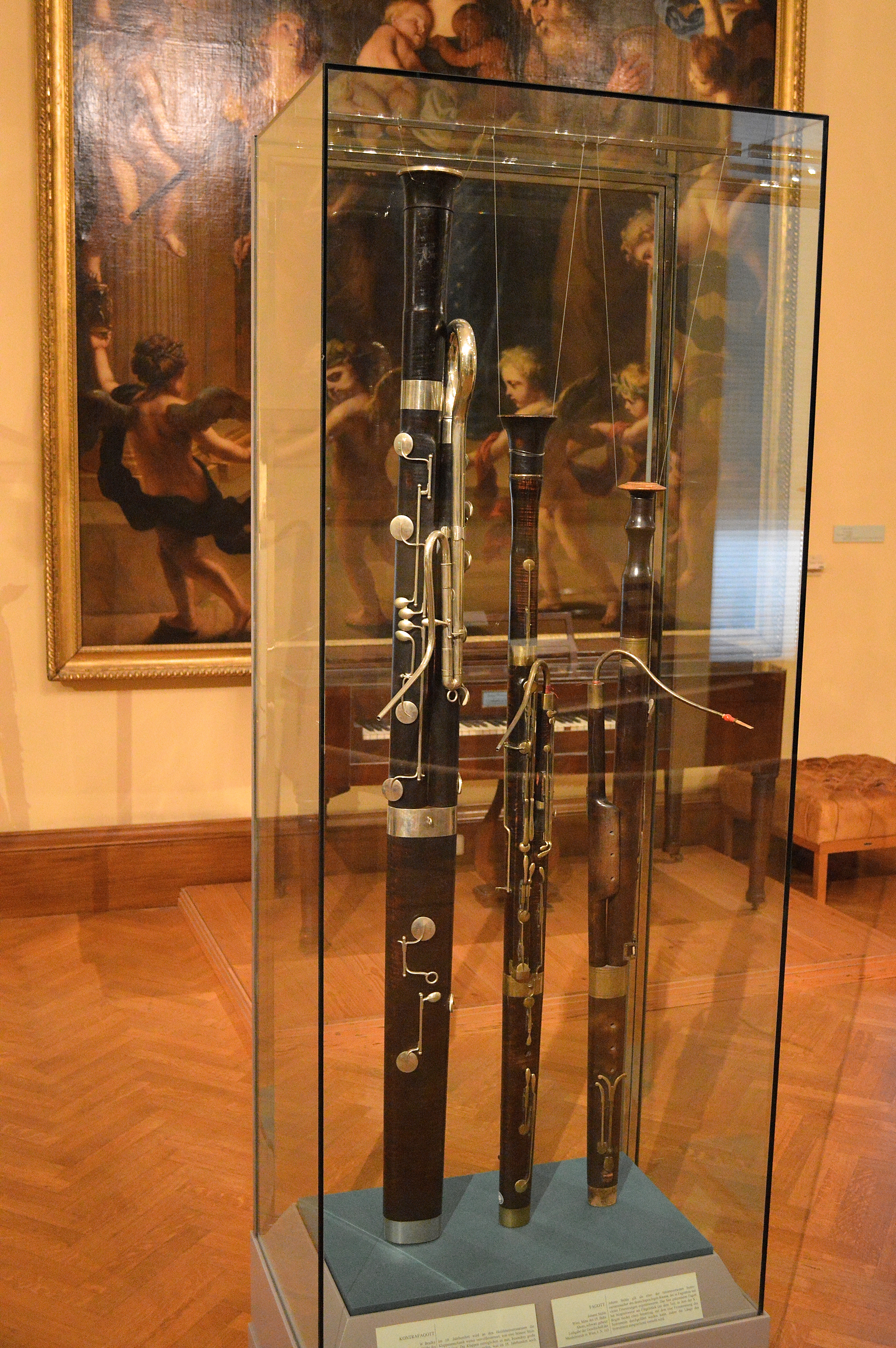
bassoon family

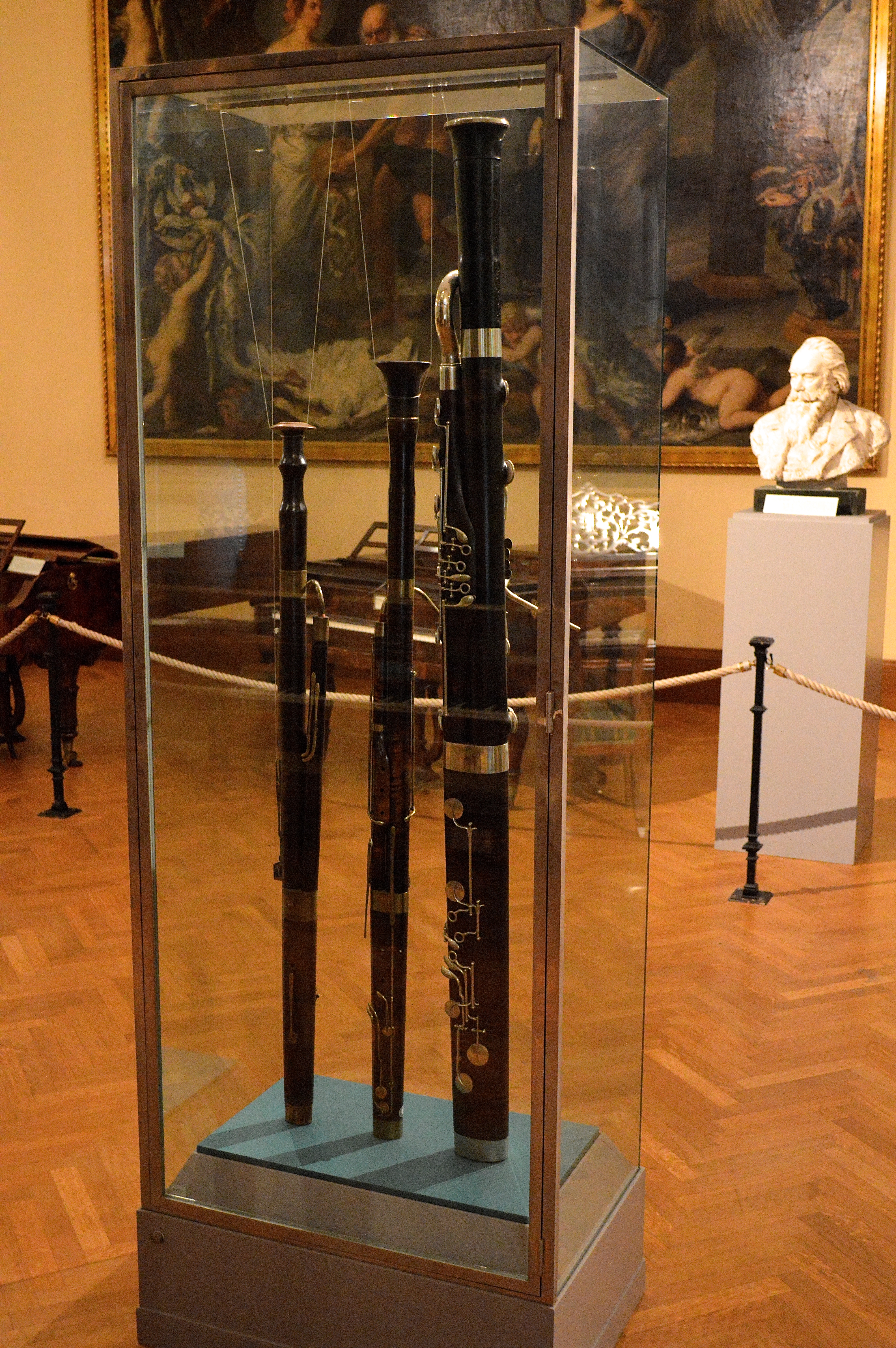
bassoon family back

bassoons

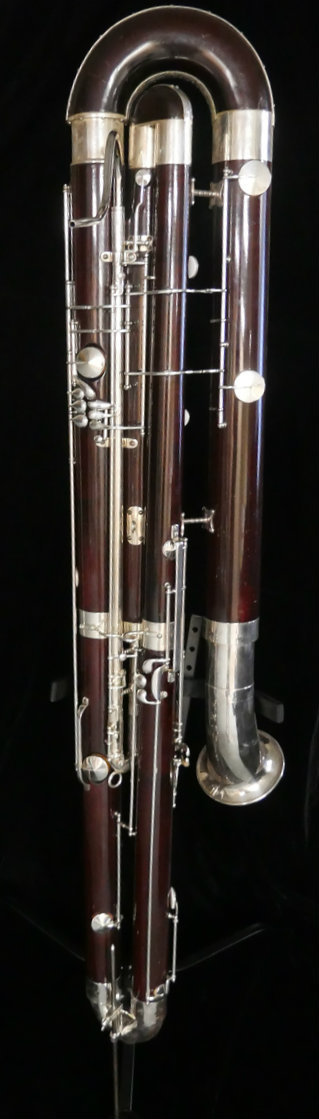
This Contrabassoon was built by Bradka in Vienna, this was his standard model in 1870.

Stehle Bassoon

This bassoon was built by Johann Stehle who at the time was considered to be one of the finest instrument makers in the German speaking regions. This instrument was an experiment as it has a tuning slide on the wing joint to lengthen the bore between the register vents and tones holes. This bassoon also has an split bell to add on a low A attachment.

Woodwind Family

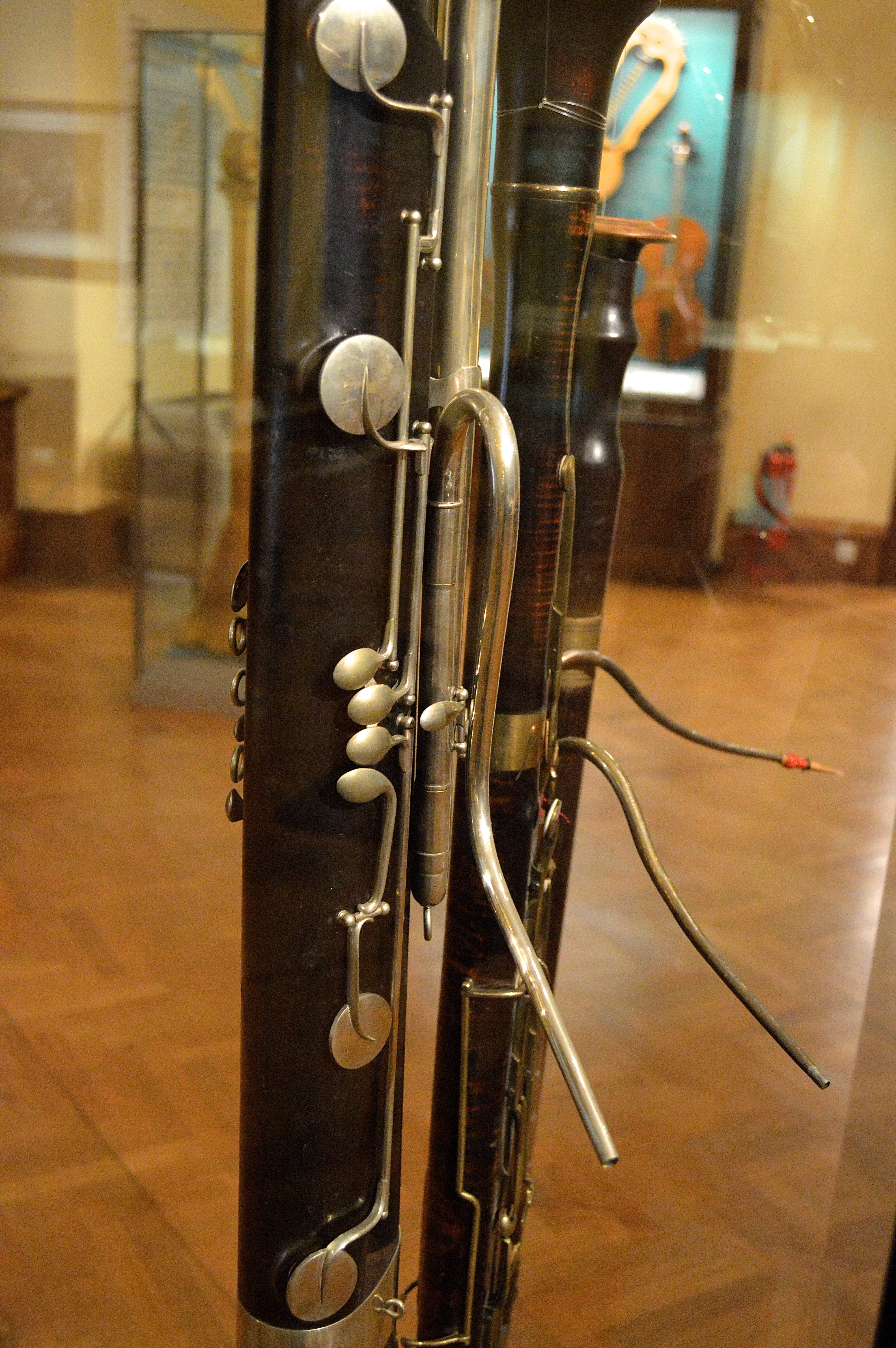
 This Contrabassoon was built by Bradka for the Viennese Jubilee crafts exhibition in 1888. This design differs from his previous models because of the rounded U-tubes to create less air resistance. “Bradka seems to have oriented this to a model from 1976 by Alfred Morton” (the contrabassophone maker)

The bassoon is a Heckel from the 1880s.

Metal Contrabassoon

This Metal Contrabassoon is made by Evette & Schaeffer in 1900, this horn uses the french fingering system. It is played using regular modern contrabassoon reeds and plays at modern pitch. I had no idea that metal contrabassoons existed until a former teacher of mine was talking to me about having played on one!

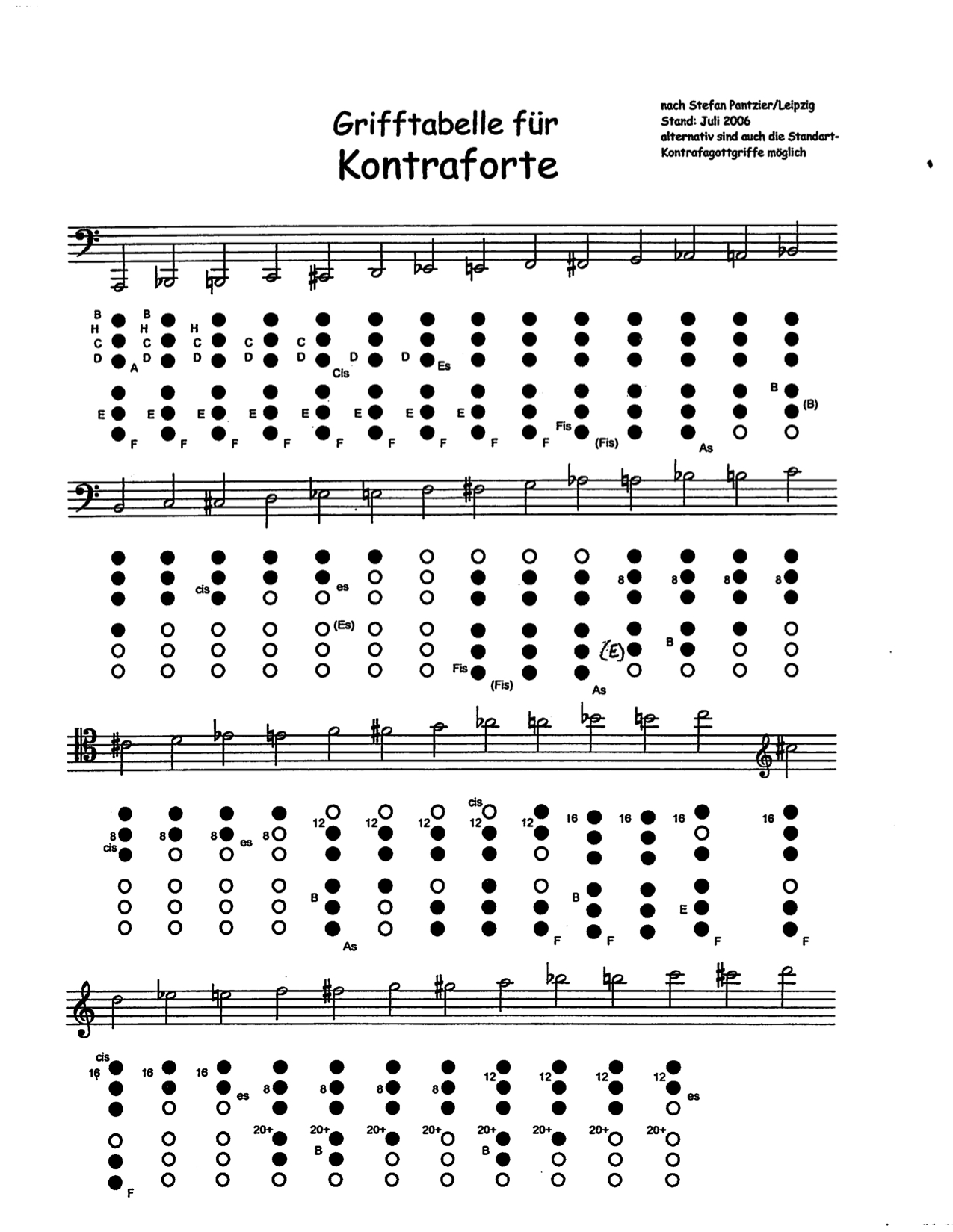
The usable range of the Contraforte is from A0-C5. This is an improvement on the contrabassoon range by a few steps. Although I know some very talented contra players that can play almost as high as any contraforte. Im mostly posting this so that composers are able to hear the timbre change of the different registers.

The Contraforte does not have a dependable high D but it is possible. Here I play the opening bassoon solo from Stravinsky’s Rite of Spring, at actually pitch. I used an extremely thick reed with a lot of resistance.

Contraforte Fingering Chart