One of my chamber groups, Keyed Kontraptions has started the season. This season is different due to the Covid outbreak, and so we have moved everything online. We are going to be releasing videos and online concerts performances in the next few months.

We are starting with a favorite piece of ours which is titled ‘Tapas’ by Marc Mellits. This is an eight movement work which is completely modular. The movements can be played in any order or just a few of them can be selected. This is a great way to build a program since we can use movements of this as an opening piece or as the closer. This piece was originally a string quartet which Marc arranged for soprano sax, clarinet, and bassoon trio.

This is my arrangement of Symphony Fantastique movement 4, March to the Scaffold. This contains a passage which is one of our great bassoon excerpts, originally it’s for the entire bassoon section to play as a 4 player soli. But I set it here as 3 bassoons 1 contra with the other parts playing the pizz. string lines. I think that this arrangement would also work if played on all bassoons without contras.

Symphony Fantastique PDF

Die Moldau by Bedrich Smetana represents a river that flows through Prague. It’s in compound meter and has sixteenth notes running constantly in the accompaniment parts, which gives the piece a flowing feeling. I set the viola line into the bassoon 3 part which is pretty busy but fun.

The ‘big melody’ of this movement is a tune called “La Mantovana” dating  from the sixteenth century. It has been used in many pieces, my favorite being Hatikvah which is the national anthem of Israel.

The PDF of my bassoon quintet arrangement is here:

Die Moldau Score pdf

A few months ago I worked on a project that required a romantic era contrabassoon! The basis of the project was to track the development of the contra over time and play some of the music written for each instrument.

Here in the Bay Area we are very lucky to have David Granger who is a period bassoon expert. And he was generous enough to let me use one of his period contras for this project.

Romantic Contrabassoon

Although I ended up getting in a few practice sessions on it; I found that I’m not a great period player, and this instrument has much more potential than what I could perform. I was able to play some Beethoven and Brahms on it but I never was able to get a high Ab which is in Brahms’ 3rd Symphony.

Romantic Contrabassoon Bocal

Both of David’s period contrabassoons were made by Wolf in the style of the Viennese contras. This is a unique instrument because it can be tuned to A=415 or 440 with the use of two different lengths of bocals. The bocal looks similar to a bassoon bocal but has a drain and is upside down when assembled with the crook.

Romantic Contrabassoon Bocal

When I practiced different instruments in the same practice session I was getting frustrated with the Romantic instrument. I liked it on its own, but if I played a modern instrument and switched back to romantic then it seemed so unstable and difficult to play. Period bassoons in general have a less focused sound, and so I’ve never gotten into performing on them.

Bassoon Contraforte Contrabassoon Romantic Contrabassoon

The reeds here are supplied by Wolf and were made by Stefan Pantzier I tried my hand at making a few and they turned out okay. The shape is similar in dimensions to the Contraforte C2 shape but with a shorter tube. The thing I didn’t try was adjusting the gouge to something more appropriate to the era. In the time before gouging machines people gouged by hand and purposefully gouged the center thinner. This meant less work had to be done in profiling and finishing a blank.

Romantic Contrabassoon Reeds

Contrabassoon Contraforte Romantic Contrabassoon

Metal Contrabassoon

This Metal Contrabassoon is made by Evette & Schaeffer in 1900, this horn uses the french fingering system. It is played using regular modern contrabassoon reeds and plays at modern pitch. I had no idea that metal contrabassoons existed until a former teacher of mine was talking to me about having played on one!

Green Reed

I tried an experiment last week involving a Green Reed for Contraforte. I just harvested some cane in early January and decided to try to immediately make a reed out of it instead of letting it dry. And this is what turned out! I regular reed that sounded and acted like any other reed but it was fresh green cane and didnt need to be soaked in water before I played on it. The texture was similar to a very hard piece of cane so I had to make this thinner than I would normally. After a few days it started to dry out and warp and is now is playing very sharp. Next I’m going to try this on regular bassoon.

I would suggest trying it to all of the cane harvesters out there!

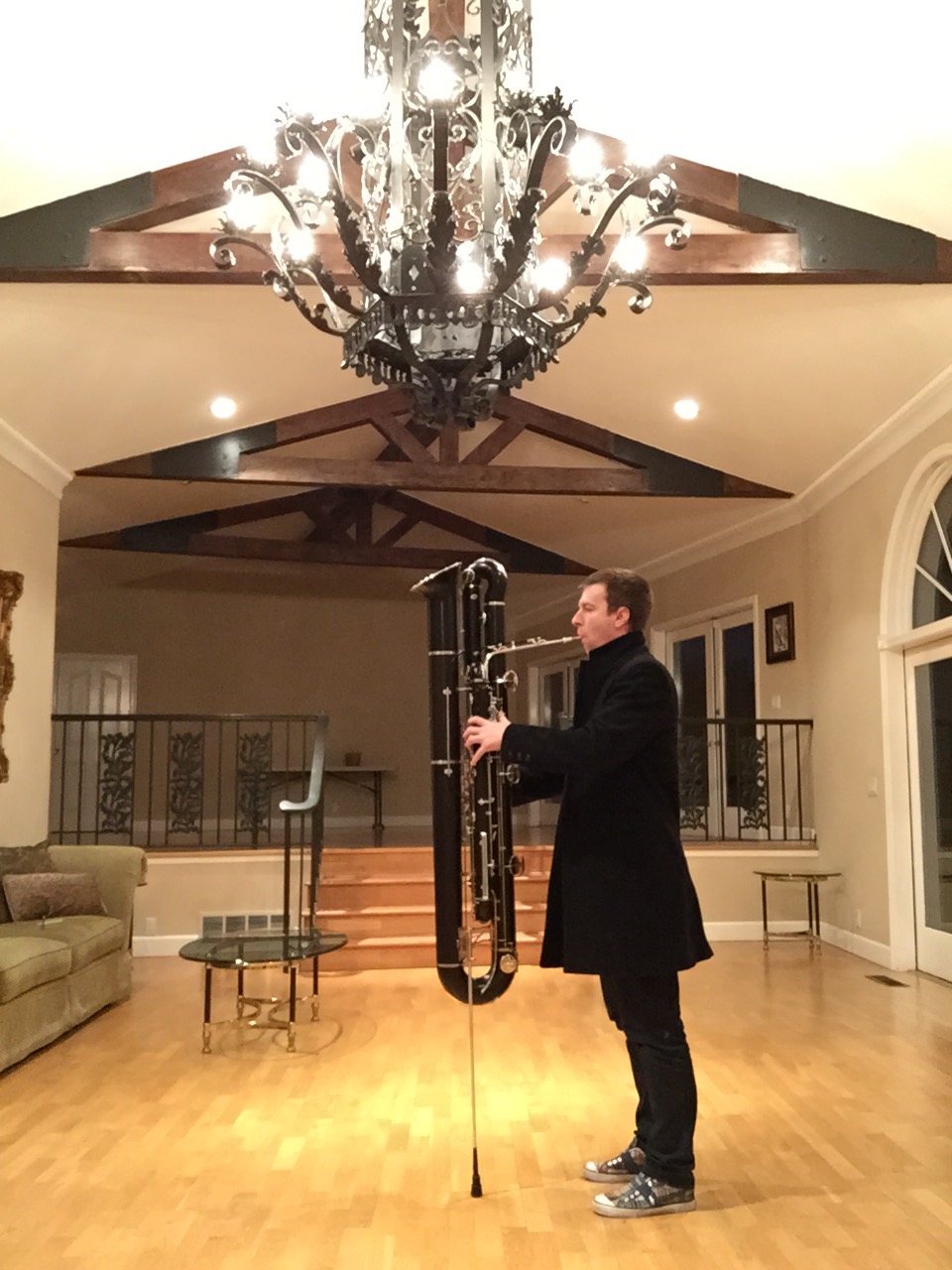
Standing Contraforte

I have been jealous of bass clarinet players and contrabass flute players who are able to perform standing. It adds to the stage presence for certain pieces and is more visually interesting to watch.

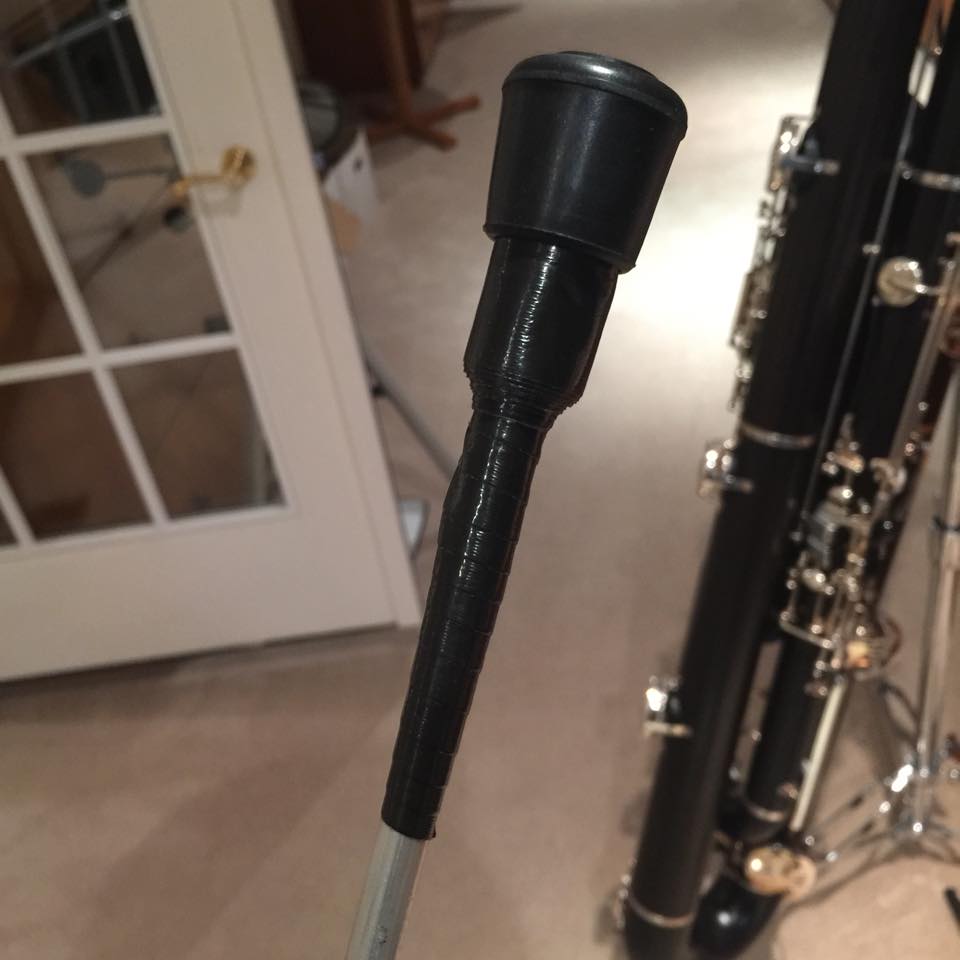
  The parts that I used to make this standing peg cost under $10 and I bought it all at Home Depot.

Contra peg 2

For the Contraforte, the peg used is 3/8 inch so it was easy to find a match. I used an aluminum rod since it aluminum is easier to cut. I have my cordless reciprocating saw, Peg stock, black Duct Tape, a Rubber stopper. After cutting the peg to length based on my height, I wrapped the tape around an end to fit the rubber stop. 

Contra Peg


The Vonk

The Vonk is a bassoon support system created by Maarten Vonk. The system is designed to be used in place of a seat strap, leg hook, or floor peg and is unique because of it’s design and weight distribution. Essentially there is no weight put on the player’s hands when using the Vonk as long as you adjust it to the correct height. I have been using the Vonk for many years now and really enjoy it. They were popular in the Los Angeles area in the mid 2000s and I know many people who swear by them. I primarily use a seat strap for daily playing, but I bring the Vonk out for days with over 5 hours of playing. For some opera productions there will be a morning service/run through, lunch, and another run through. This is too much playing for me on top of my regular practice, so this system saves my hands.

The Vonk

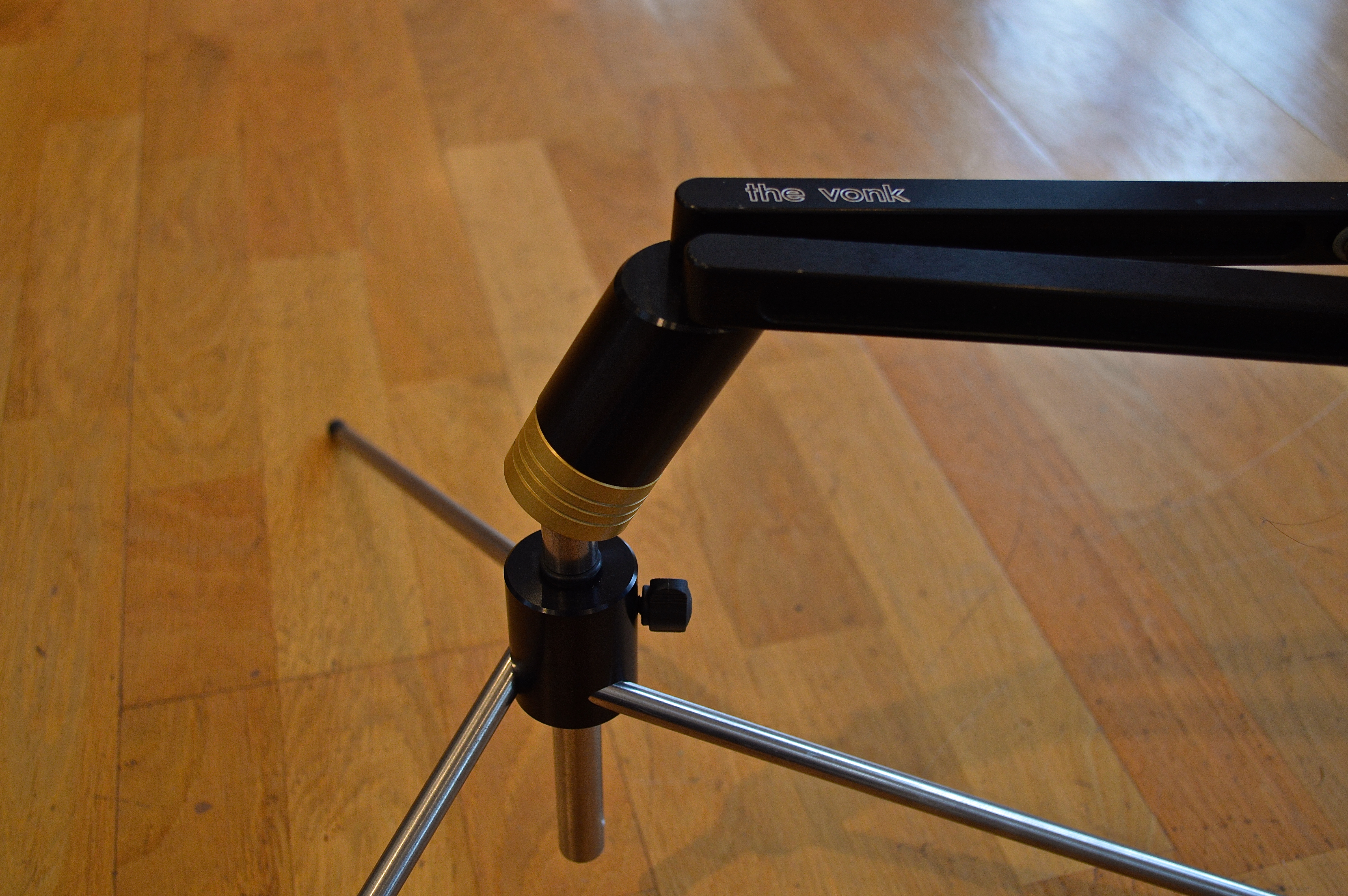
The Vonk has two metal bars that attach to the base tripod. At the other end is a nob used to tighten the boot cap into the clamp. Depending on your bassoon, the boot cap might come loose, so test this area of the bassoon to make sure that you bassoon will stay up. If the boot cap comes loose, the bassoon fill fall off. The clamp tightens at a moderate pressure, too tight might dent the boot cap and too loose might cause the bassoon to slip. I have never had a problem with this. I play on a Fox 601 and it is very sturdy, however I can see how this could be a problem for some bassoons.

The Vonk

The real piece of engineering that sets this system apart is the tight ball in socket joint. This joint is the counterbalance for the weight of the bassoon. With the gold section engaged the Vonk becomes a bassoon stand. It disengages the ball in socket joint and so the bassoon stands vertical (see top photo)

The Vonk

When the gold section is brought down, the joint it engaged. This gives a large range of motion and is adjustable. Not only is the position and angle of bassoon changeable but also the height, so it is usable with most chair heights. When the system in engaged and in position, the bassoon just floats in front of you. The Vonk is available online at Bassoon.com

The Vonk