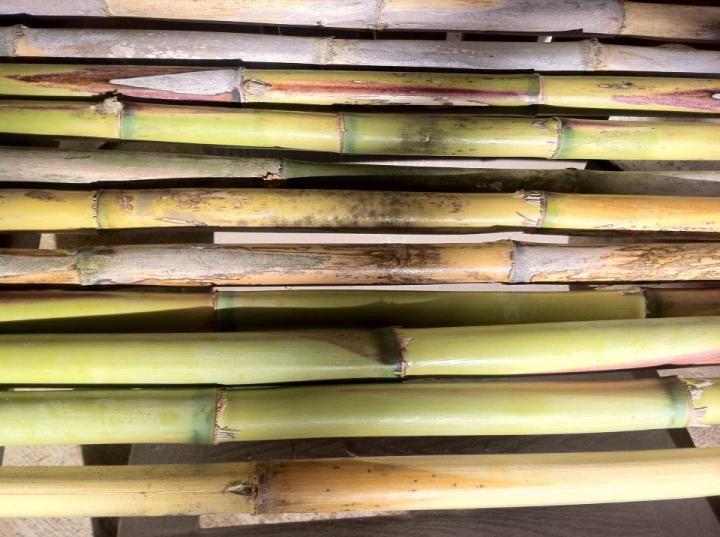
I have the great advantage of living by a field of naturally occurring Arundo Donax. My mother lives in Ventura, California and the Ventura river, from the Ojai river, is infested with an unending source of cane. The easiest place for me to collect this cane is where the river meets the Ocean. The is however a problem with this cane, since it grows basically on a beach, it is very weathered and dry. From what I have experienced so far, much of this damaged cane makes very soft reeds. The sun, sand, salt, wind, humidity, and temperature take much of nutrients from the cane and leave it very porous and soft. The best cane is in the middle of the fields, so it takes a bit of work to get to, but this cane is the most protected.
All of the pieces I have cut are in different phases of the drying process. I have read many articles about the drying process and what some of the big cane producers do. First I have read from two separate sources to harvest cane the day after a full moon. “the pitch is up” and something about the gravitational difference of having the moon high in the sky during the day pulls resources from the roots into the fibers. From there on the process is very different company to company. Most french companies keep the cane outside to dry in a “teepee” formation for a whole year. Where as the Rico company keeps the freshly harvested cane outside in the sun for 10 days and then moves it all into huge indoor storage facilities and large ventilator fans.
For my part I am going to harvest enough cane to allow me to try a number of different methods. Some I will leave outside, others will stay mostly inside, and others I might cut to shorter segments to see if it will dry faster. Most of the pieces I cut are 5-6 segments long and so ill have different sections of the same cane to work with.
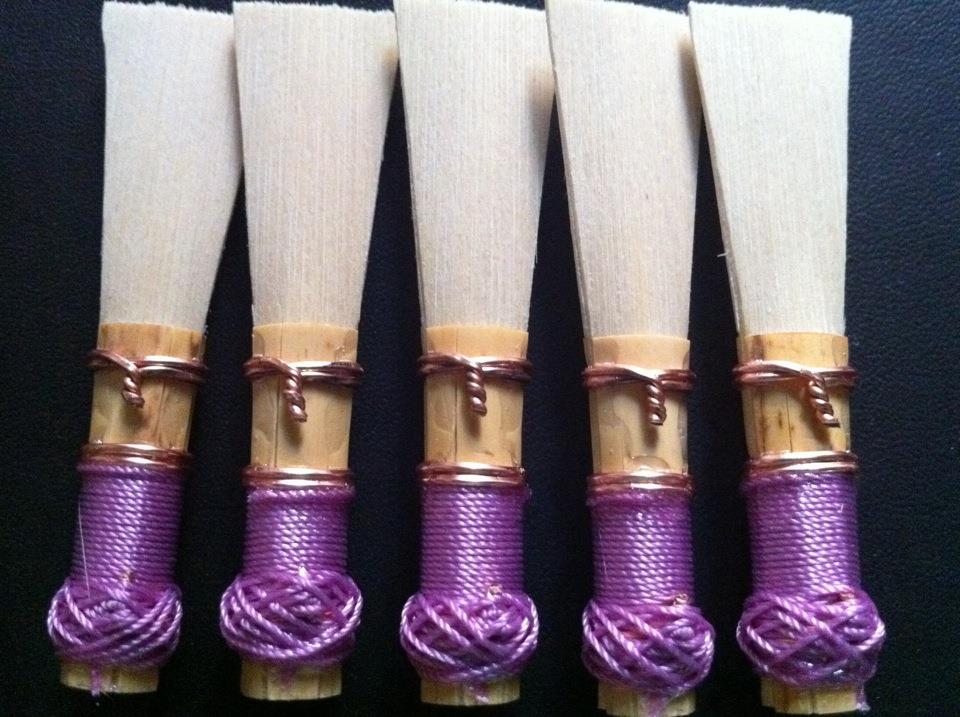
Ill be sure to post pictures of the reeds made from this harvested cane!


 Kristopher King