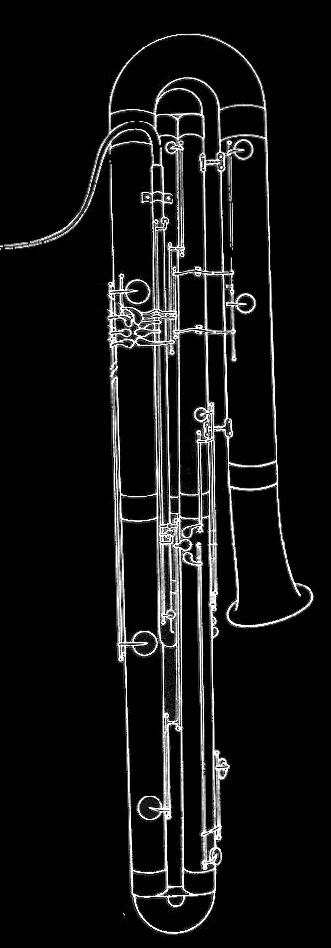
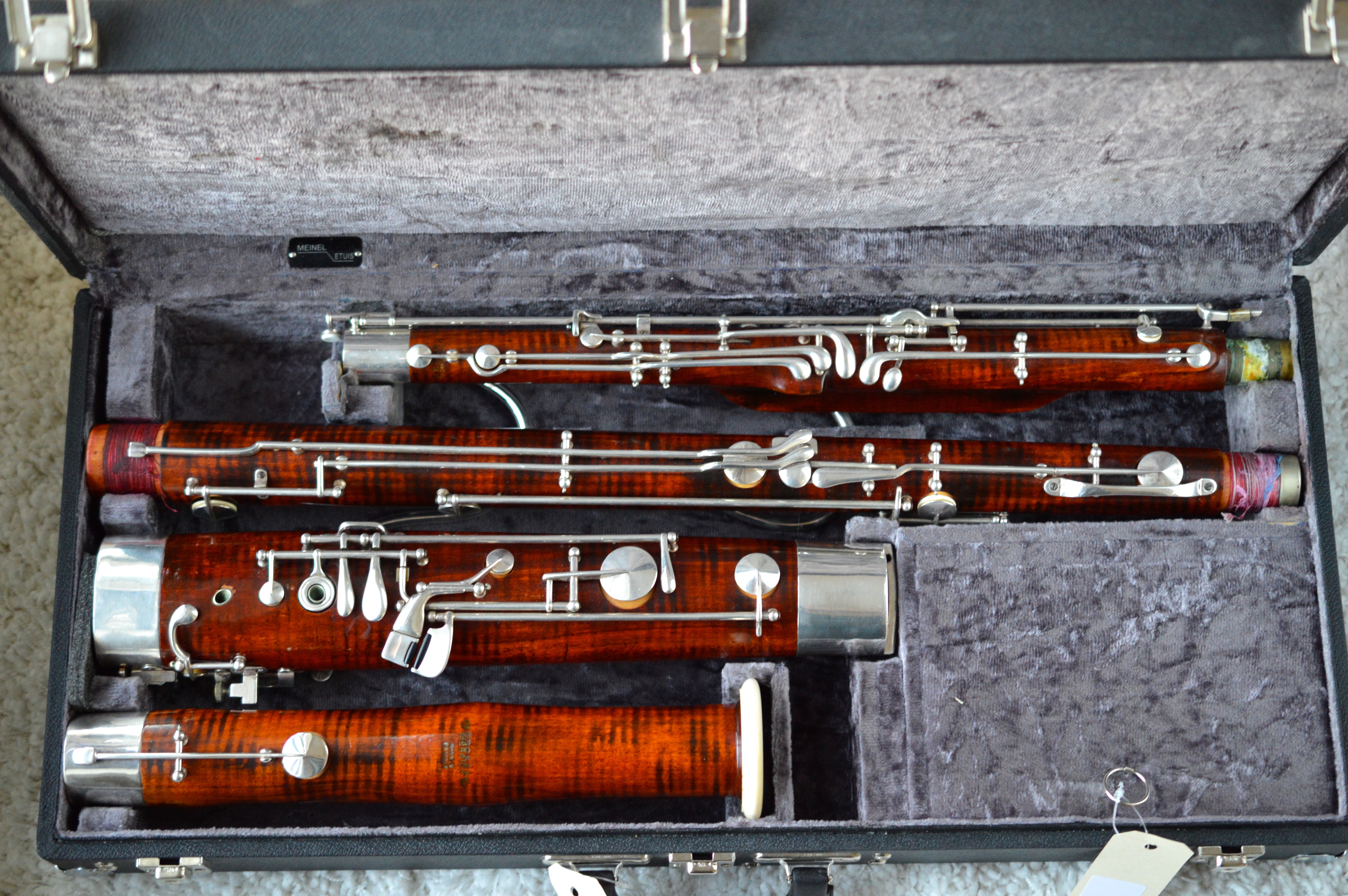
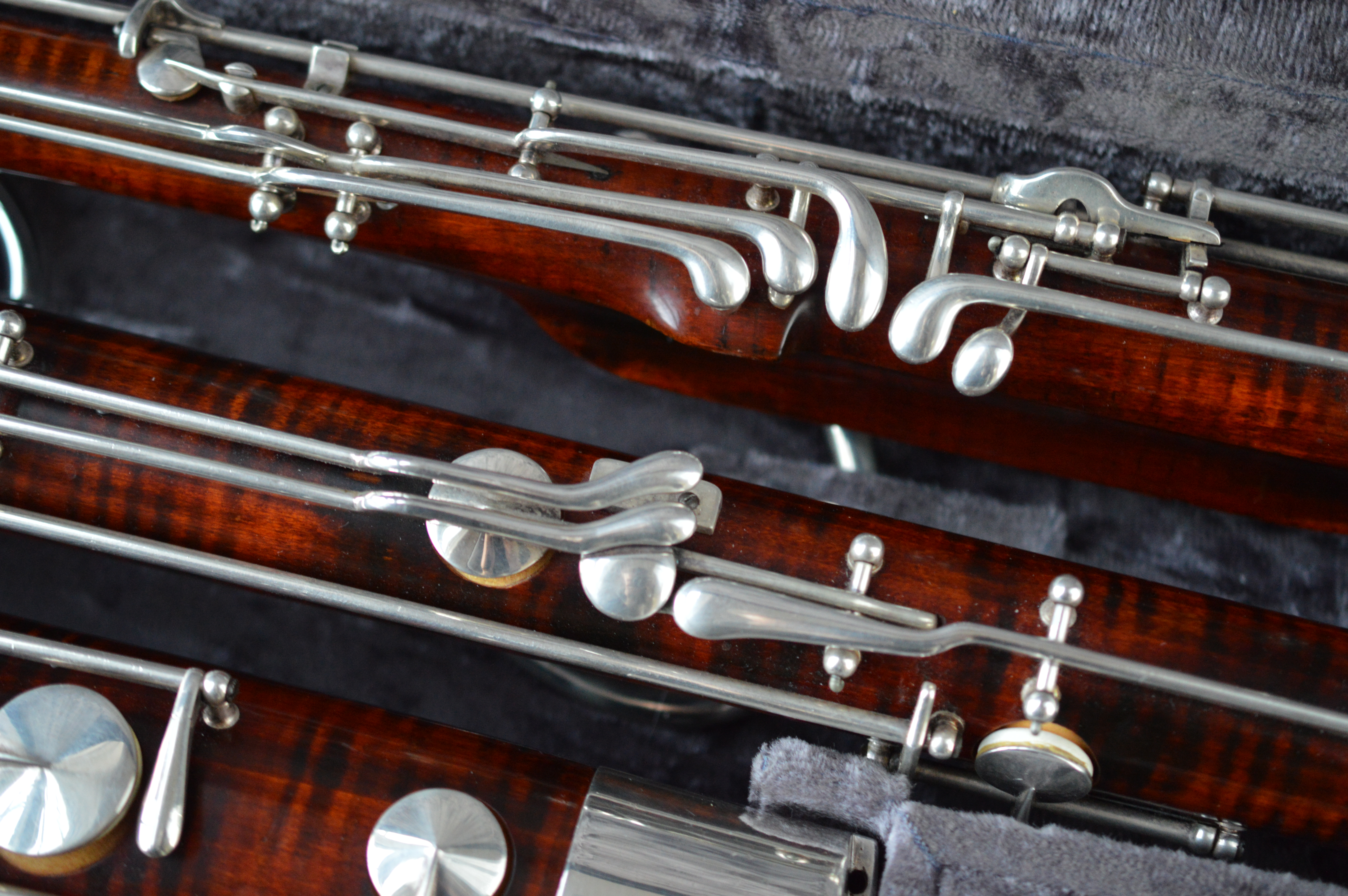
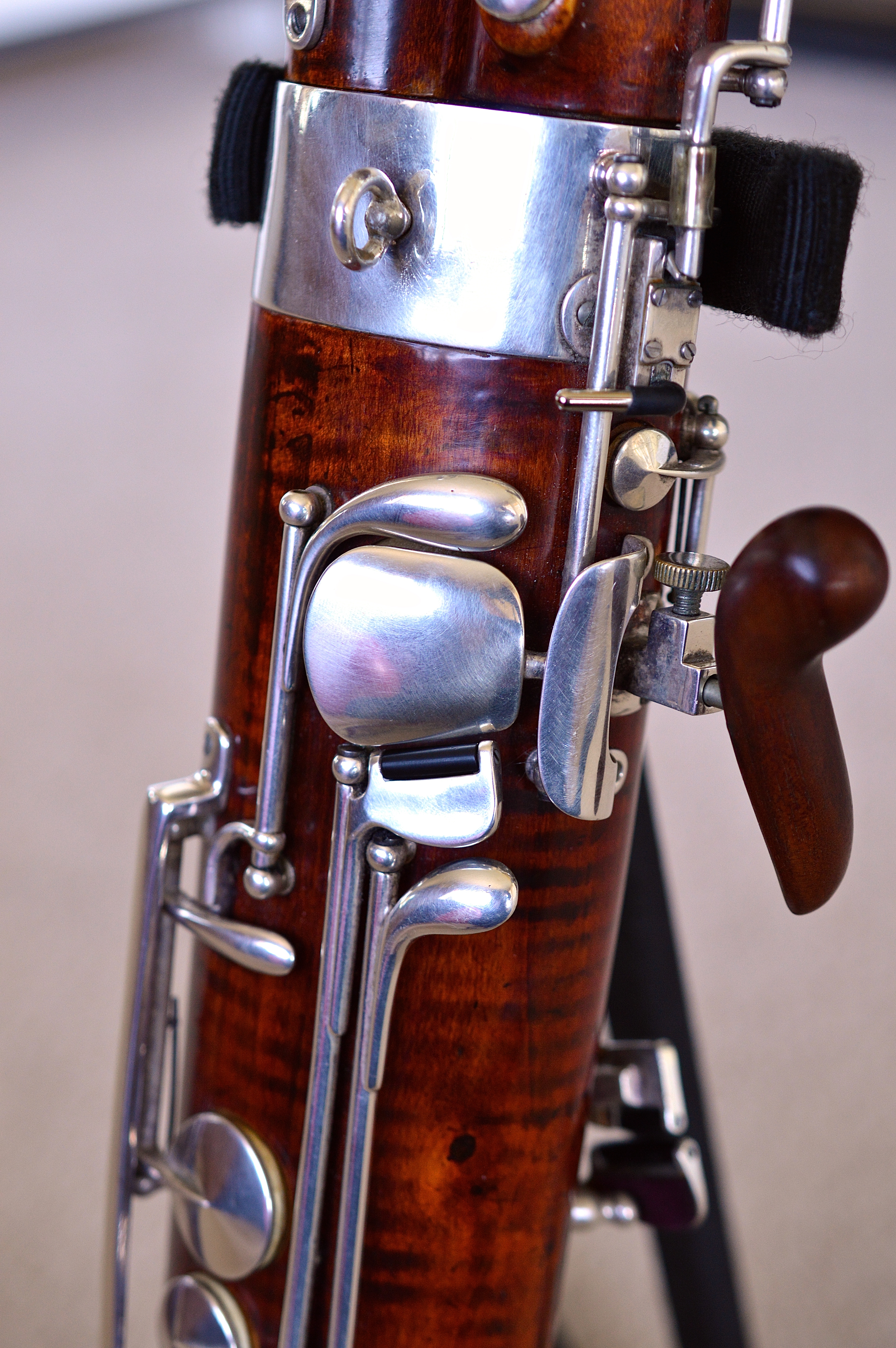
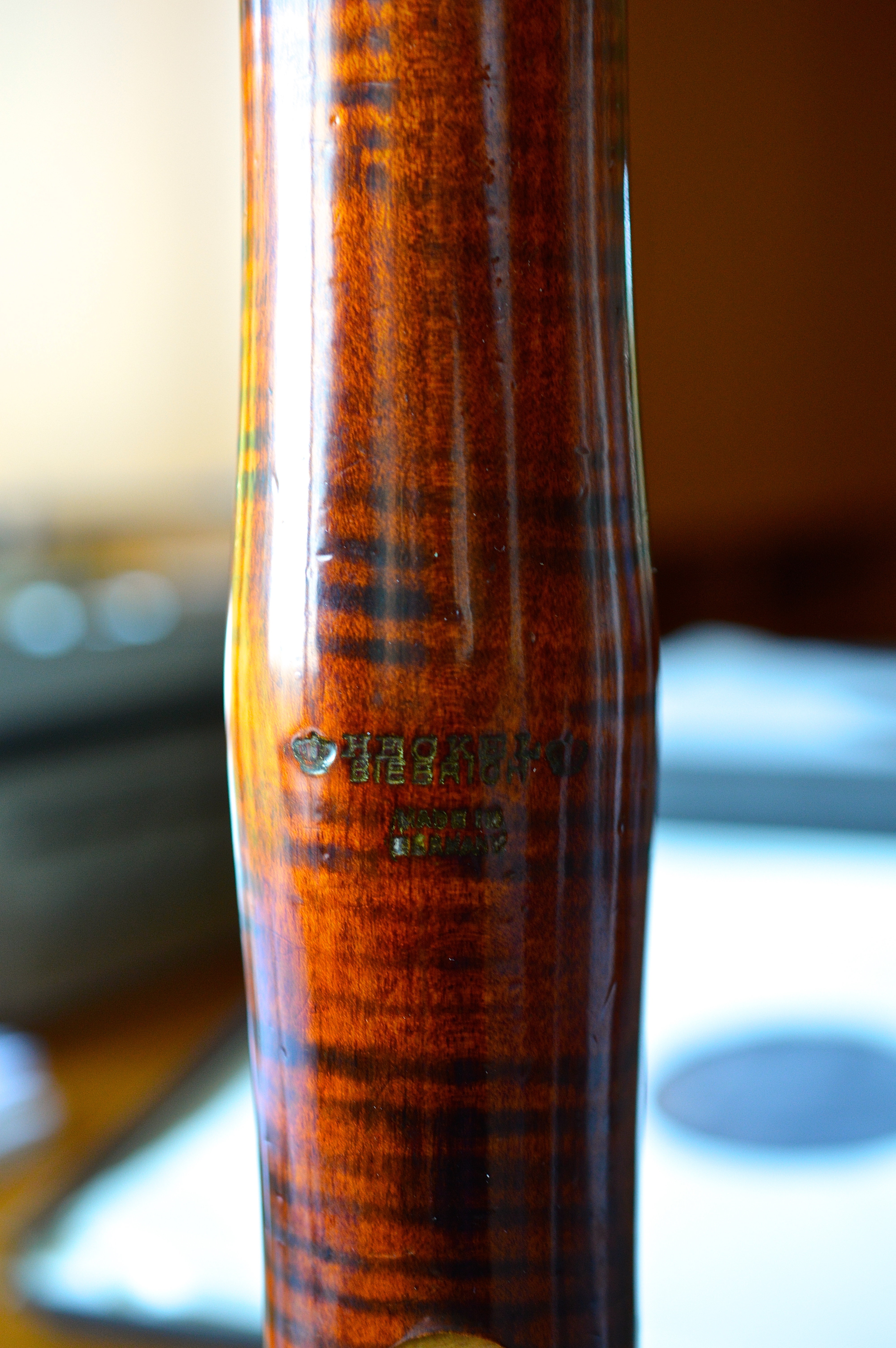
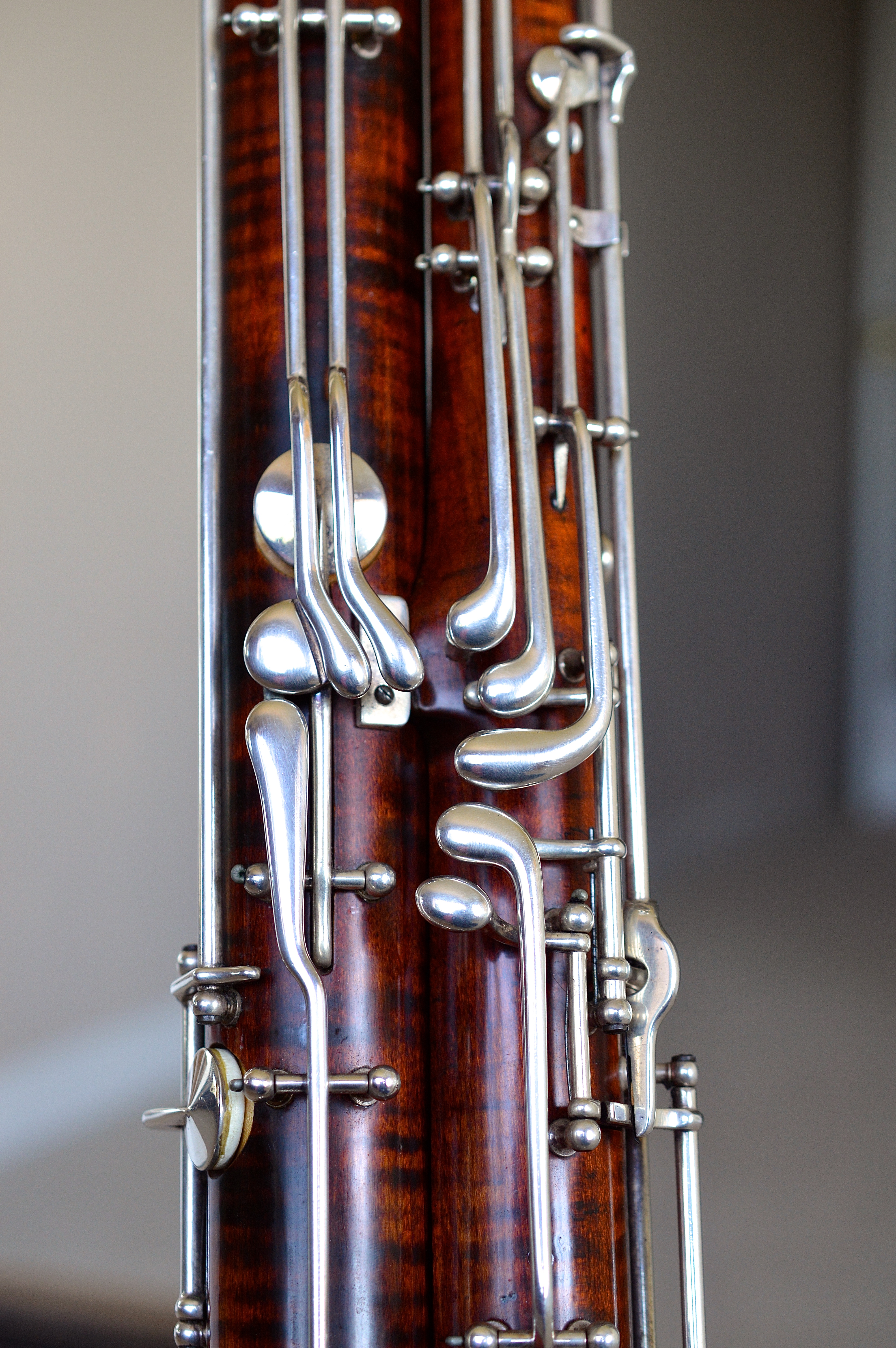
This Metal Contrabassoon is made by Evette & Schaeffer in 1900, this horn uses the french fingering system. It is played using regular modern contrabassoon reeds and plays at modern pitch. I had no idea that metal contrabassoons existed until a former teacher of mine was talking to me about having played on one!
Kris King
Making Plastic Reeds
Legere has been making some great bassoon reeds! but they left out us contra players. So this is a video on making plastic reeds from a commonly found item, a Slurpee!
Gouged Bassoon Cane
After a great year of cane I am now selling gouged bassoon cane on KingBassoonReeds.com
It sells in bunches of 10 pieces per bundle for $22.00. If you have ever wanted to try California cane this is your chance!
Tangential Bassoon
I was recently talking to my neighbor about what I do, and it turns out that he used to be a clarinet player. He said that he didn’t continue on to a professional level because he needed to invest so much in equipment. To be a pro clarinet player, he said, he needed to buy a whole family of pro clarinets and he just wanted to play Bb soprano clarinet. So this got me into talking about the bassoon tangents that people get into, in a professional or sub-professional way. Every bassoon player plays bassoon for a while and then there are a few different directions to go experimenting.
Probably the most responsible secondary horn is contrabassoon. This is very practical since it’s also used in the orchestra and most bassoon teachers can help with it. The only obstacle with contra is getting access to one since they are expensive and unpopular. As a student in college it’s becoming standard to take out extra loan money to finance a new instrument, but usually graduate programs are more lenient on addition loans.
French Basson is mostly dead at this point. People play them out of curiosity and on a hobbyist level. I had one for many years and I was never tempted to take it to a gig instead of a Heckel system bassoon. That being said, french bassoon can be a cool thing to pull out on a recital or for chamber music. My high point was being able to play the Saint-Saens Sonate on it, but it never made it out to a recital. This scratches the itch of wanting to play a historical instrument but its also pretty easy to learn.
Baroque bassoon is another route that some players go. Baroque orchestras are becoming much more popular in California and New York, and so there are maybe a few more gigs for baroque players on top of regular orchestra gigs. Baroque is much more difficult to play well and isn’t as pleasing to listen to unaccompanied, so learning it can be tedious. When I have done “baroque” orchestra gigs, it usually ends up being some sort of mixed ensemble. The woodwinds and principal strings play baroque instruments, but the rest of the strings play on modern setups. I am not a baroque bassoon player but I do sometimes want to play historical literature on the authentic instruments. Baroque bassoon are also much much cheaper than modern bassoons.
The bassoon has recently been modernized even further with the addition of an electric pickup. With a modified bocal, players can plug into an amp and use the same filters and effects that an guitarist can use. There are so many great electric players but not so many gigs. This isn’t so much a career path as it is a way to bridge the gap and get into jazz or rock etc.
Heckel 5751
This week I had Heckel 5751 on trial from RDG woodwinds. This bassoon was made in 1922 and has been modernized with a high D key, E key, rollers, and tone hole inserts. The stain and lacquer is in amazing condition, maybe part of the restoration.
The new keys have been added in a tasteful way and the key casts match the originals. However this bassoon still has the original ivory bell which makes it difficult to travel with.
This bassoon has a lovely sparkling voice and is still available at RDG
Fox 601 For Sale
I am selling my Fox 601 bassoon. I am continuing to downsize my bassoon collection so that I can afford a new horn for myself. This is an amazing instrument that has been used in symphony orchestra for years. I have had this bassoon for 10 years now and it got me through the San Francisco Conservatory and many of my first gigs in San Francisco. My reason for selling this is simply that I like to change my sound every few years and I am looking for something new.
I have found that this bassoon is very flexible and change sounds with different bocals and reed shapes. I can blend with older Heckel bassoons and project for solo playing. I have been most successful with Heckel and Leitzinger bocals with Hertzberg and the Fox #2 shapes. I am selling this with 4 bocals and the Wiseman case; the horn has a little finger whisper key, A flick key to whisper bridge, Ab-Bb trill key and roller on thumb F# and Bb.
Selling for $18,500 or best offer. Feel free to send me an email through the Musical Chairs listing
Musical Chairs Fox 601
French Bassoon For Sale
I am selling my French Bassoon! I have had this bassoon for a few years now and have had so many adventures with it. But in the last year I haven’t really played on it and I have decided to find it a new home. This bassoon has been dated to 1940 but unfortunately bears no makers mark or serial number. The bell shape looks like the Selmer French Bassoons at that time. I am including the bocal that it came with and the music lyre base that was attached to the bell (although I took it off)
You can find the listing for this bassoon on eBay:
Downsizing Bassoon Collection
I have started to develop a bit of a bassoon collection and I don’t get to play some of them.
My high school bassoon is usually rented out to students, but it has been sitting in my closet for the last year. So I’m going to sell it! It’s up on eBay if anyone is interested. This is a King Symphony Bassoon made by Schreiber in Germany and stamped by King, the America instrument manufacturer.
Contrabassoons of the World!
It’s so amazing that we live in the age of youtube and world wide web! We are able to hear what different players sound like all over the world, the differing styles and tones of certain players. Contrabassoon is especially interesting because I don’t think that contrabassoon tone is uniform throughout most cities! Thanks to players uploading footage and interviews we are able to hear from a wind section that we wouldn’t normally have access to. These are a few clips featuring players around the world.
Amrei Liebold, Orchestre de Paris
Luke Whitehead, Philharmonia Orchestra
Dominic Morgan, London Symphony Orchestra
Lewis Lipnick, National Symphony Orchestra
Jaap de Vries, Netherlands Philharmonic Orchestra
Gregg Henegar, Boston Symphony Orchestra
King Bassoon Reeds
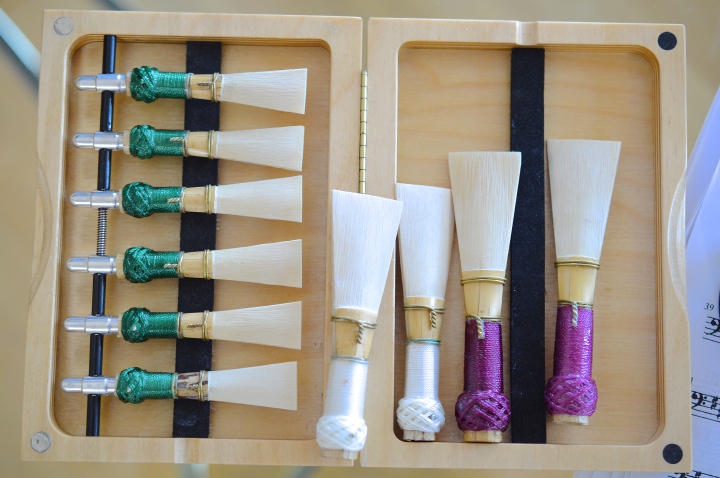
I have just started working with a new batch of cane and it is very high quality. This is cane that was cut 2 years ago and is on the harder side. It seems more middle of the road and has been great with the Fox 2 shape for bassoon and Reiger K1 on contrabassoon. If you are interested in some reeds head over to King Bassoon Reeds or email me if you are interested in cane.