Hindemith wrote such a wealth of music for solo instruments that almost every player in the orchestra has a piece. Hindemith wrote Sonatas for flute, oboe, english horn, clarinet, bassoon, trumpet, horn, trombone, tuba, violin, viola, cello, bass, harp and even wrote for rare instruments like heckelphone. Double reed players particularly like Hindemith because so few works for solo were written for us during the early 20th century, and his are so idiomatic.
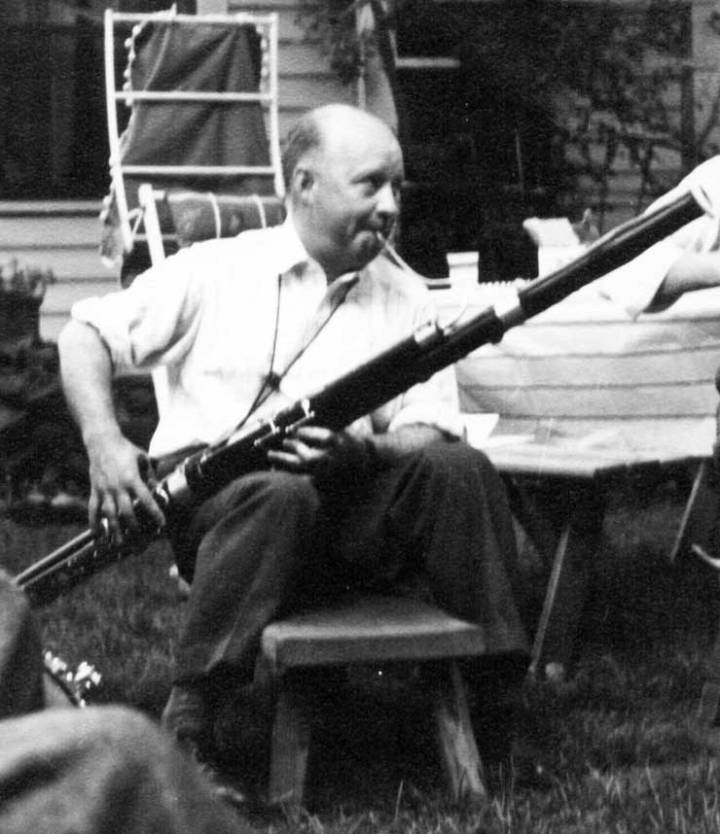
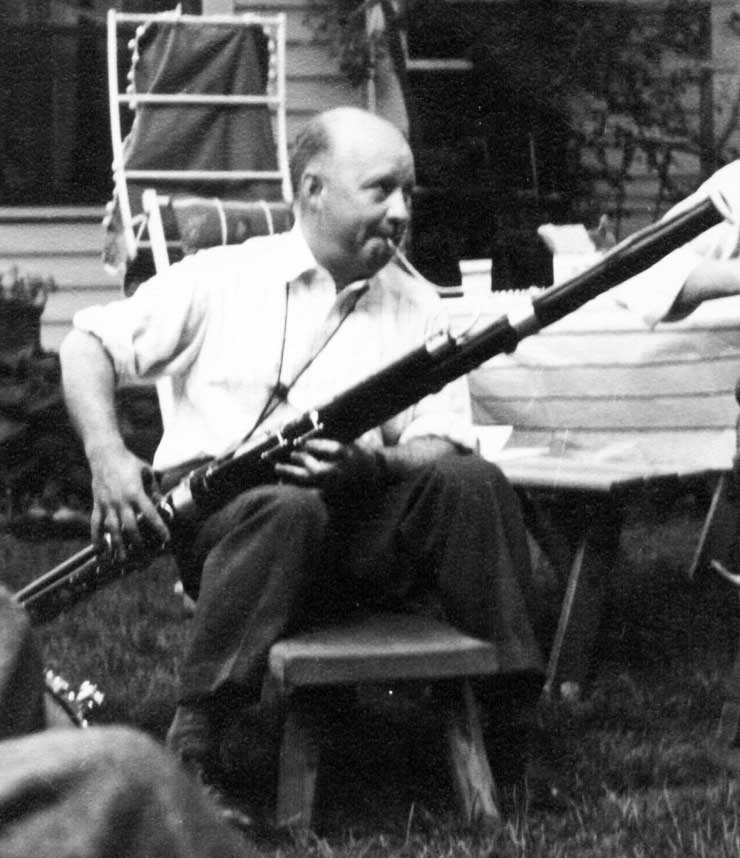
Hindemith Playing Bassoon, 1940
The Hindemith Bassoon Sonata is a college bassoon recital ringer. It is harmonically interesting without being too taxing (for the bassoon player)
Hindemith’s music was banned from performance in Germany in 1936 and so he relocated to Switzerland. And in 1938 he wrote the oboe sonata and bassoon sonata.
The following year, still in Switzerland, he composed the clarinet sonata, trumpet sonata, harp sonata, french horn sonata, a viola sonata and a violin sonata.
Paul Hindemith died in 1963; in the last decade of his life he completed the tuba sonata, string bass sonata, organ concerto and sonata for four horns
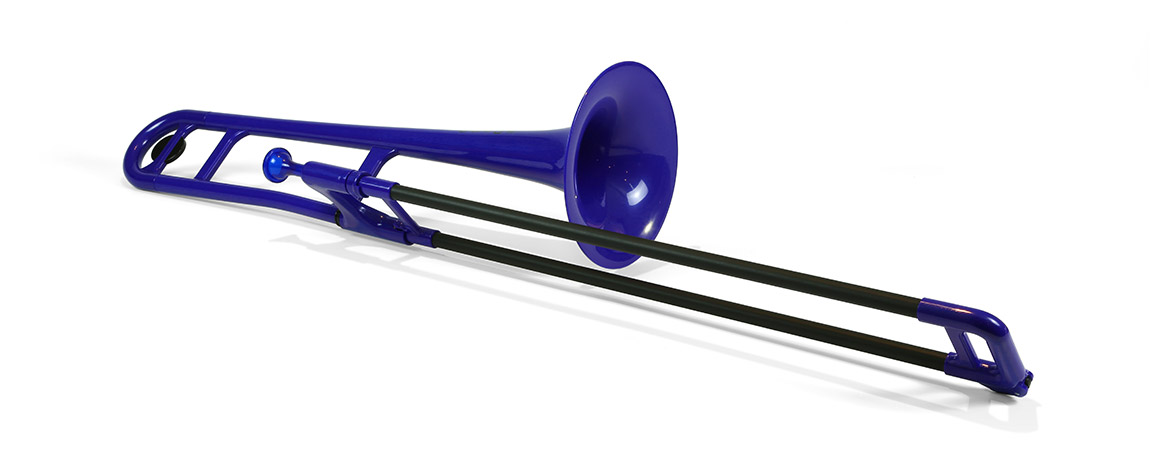
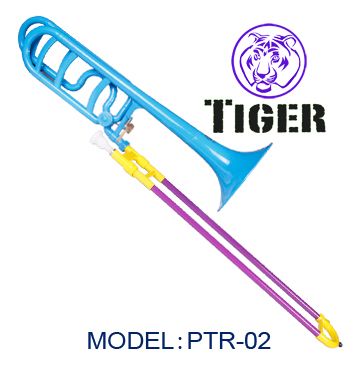
There is a new wave of music products that is aimed, not to be the very best, but to be accessible and affordable. There have been plastic woodwind instruments for many decades, and they are a more cost effective and durable choice for young players.
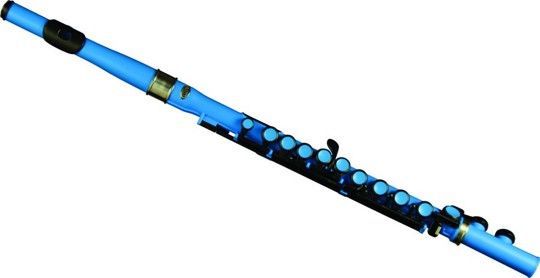
Now there is a new wave of plastic instruments that are lower quality and don’t try to compete with the real wooden instruments. These instruments are mostly made in Asia, and are mostly made from injection mold plastic.
Contrabass versions exist for almost every instrument now. Most of the newer instruments are scarcely written for and are mainly used in new music. There are a few newer companies making wind instruments that can go lower and lower. Eppelsheim makes my contraforte, as well as a very well received contrabass clarinet, tubax, and contrabass sax. Hogenhuis is popular making contrabass flutes.
I tried an experiment last week involving a Green Reed for Contraforte. I just harvested some cane in early January and decided to try to immediately make a reed out of it instead of letting it dry. And this is what turned out! I regular reed that sounded and acted like any other reed but it was fresh green cane and didnt need to be soaked in water before I played on it. The texture was similar to a very hard piece of cane so I had to make this thinner than I would normally. After a few days it started to dry out and warp and is now is playing very sharp. Next I’m going to try this on regular bassoon.
I would suggest trying it to all of the cane harvesters out there!
Sometimes as professional players we hit road blocks in our repertoire. As good as we think we are, and as prepared as we may be, there will always be a passage lurking out there which will require some work. So much of being a bassoon player is about playing in an appropriate and handsome way and blending with an orchestra. I have recently chosen a piece of music for an upcoming recital that is pushing my limits, I will be playing the Franck Cello Sonata on Contraforte. The recital is in about three months and I have in working on this piece for the last three weeks. At this point all of the “fun music” has been rehearsed as much as it needs to be and the technical passages now need to be “woodshed.”
(I had to repair some of the slurs)
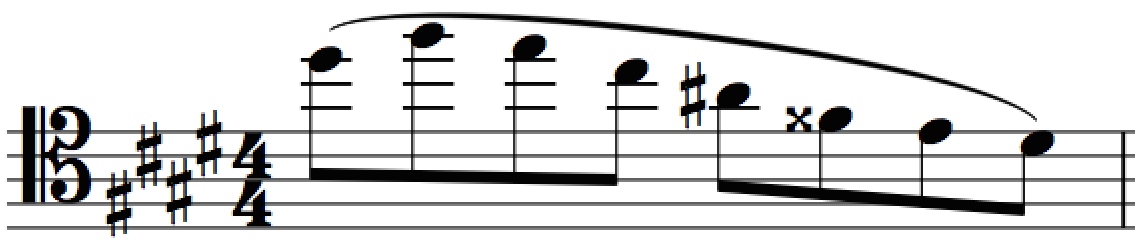
I chose the Franck Cello Sonata because it really shows off the upper register of the Contraforte. I’m finding that I’m able to play extreme high note passages in an easier way than on the bassoon. This passage that I selected is one that I am finding to be particularly difficult to get up to tempo. It is getting better each day, but I think it is only due to switching up my practice techniques and thinking about the note groupings in new ways.
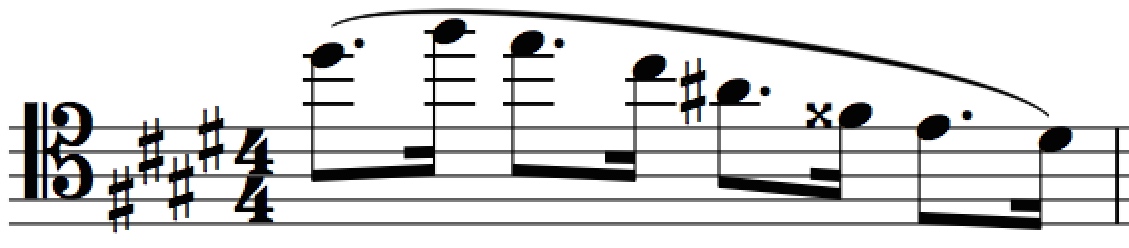
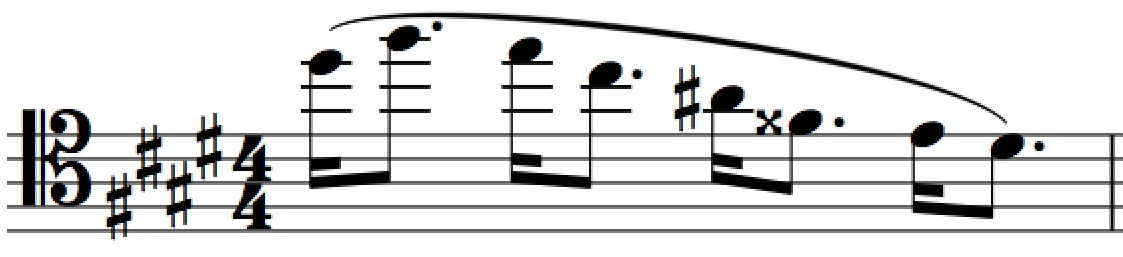
For this passage the beginning of measure 4 is a tricky spot, mostly this has to do with the fingering system on the Contraforte. These are the ways that I use to practice it:
These are the ways that I first use to learn a difficult spot of music. If after a few days the passage is still unplayable then I use a few different rhythms to add in. As a side note, I find practicing to be stressful. By micromanaging difficult passages like this, one can create “baby steps” that are achievable everyday. These rhythm studies are a way of taking the notes out of musical context and playing them as a mechanical technical exercise.
This second set of excercises is designed to focus on the notes. These help me when I am having trouble concentrating, or am practicing in the morning and still half asleep. Playing staccato isolated notes is a memorization technique. The sixteenth slurred pattern isolates the finger movement between the notes, I try to have “lightening fast” fingers. Play the note full length and then move to the next fingering as fast and efficiently as possible.
Some other things that I try to keep in mind when I practice, in order to make my sessions as efficient as possible…
-Have a good reed
-Warm up with both long tone and technical exercises
-Have a tuner and metronome on whenever you are playing alone
-Don’t allow yourself to get away with cracked notes or sloppy fingers
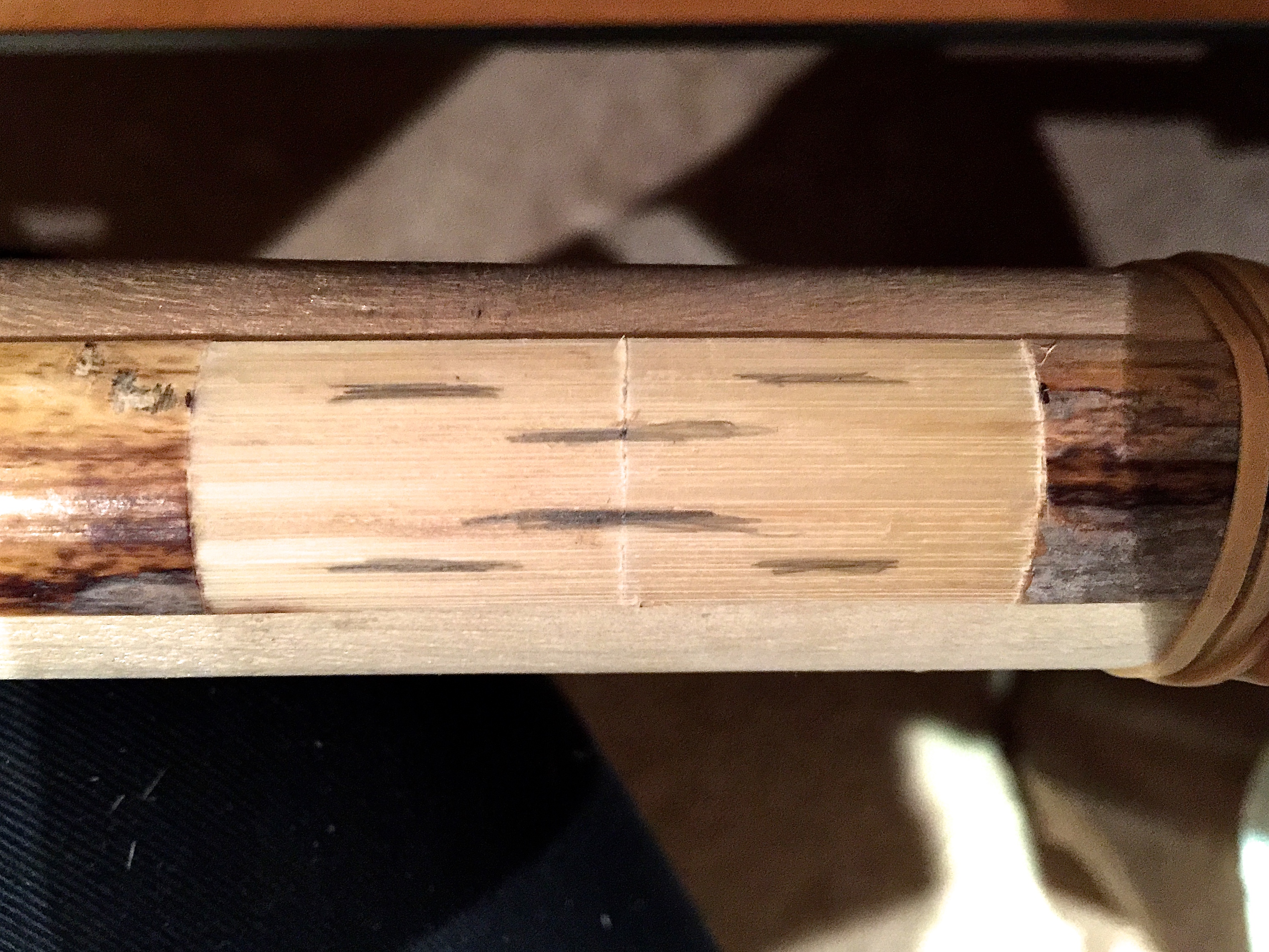
Bassoon predates profiling jigs and modern profilers, so early players profiled cane by hand. The process isn’t complicated but it takes practice to get used to the feel of carving off material. Just like a modern profiler takes off a “chip” of cane at a time, hand profiling takes off thin layers at a time. This also works just as well for contrabassoon cane.
To start, take a piece of soaked, gouged bassoon cane and strap it to an easel. Hand gouging is even easier than hand profiling (wrap sandpaper around an easel and keep measuring until you’re there) I use a rubber band to attach cane to the easel, I am using 120mm cane. Mark the centerline and mark the two collars. My finished reeds have a blade length of 26.5mm from the collar, so I keep 28mm of blade length for the blank before I cut it open. In other words, mark your collar line at 28mm from the center on both sides.
Then score the center line and the two collar lines, score deeply so that you can get a chip started. Then take your knife and remove then bark. Start at a collar line and pull towards the center, this step is just the bark so do make the chip too big.
Now You should be left with a uniformly “peeled” area of an equal thickness. For people beginning to hand profile, the first few pieces of cane, this will already be a disaster. I like to use a double hollow ground knife for this whole process since I can get the edge sharper and control the cutting angle better.
Now thinking ahead to what you’ll like to have when finishing the reed, the spine should be left alone. It is thick right now, but once it becomes too thin then it is ruined. Mark two lines on the center line dividing the cane into thirds. Then divide both of those outside thirds in half again.
The center area will become the spine so it will be left alone for now. Take off another layer from the outside thirds (everything except the center) and another layer from the two outermost sections. So now in total; the center of the cane was only peeled, the outer thirds had been peeled and a layer taken off, and the outermost section has been peeled and two layers taken off.
At this point use sand paper or a large metal file to buff out the lines and sharp edges. I prefer course sand paper and then medium sandpaper. Make sure to give it another dip in water before folding and shaping.
The finished piece should look something like this. It will never be as pretty as when a profiler is used, and it will take much more time than using a profiler. Hand profiled cane will create a thicker blank which leads to more work in the finishing stage. I have relied on my hand profiling when my profiler blade was out being sharpened, and I started in high school when I didn’t own a profiler. There are 2 or 3 different patterns to creating the final dimensions this is the simplest and quickest. The biggest obstacle is learning how to set the chip thickness and feeling how deep to cut for each layer. I consider peeling the bark as taking off a layer, so each chip should be the same thickness as the bark.
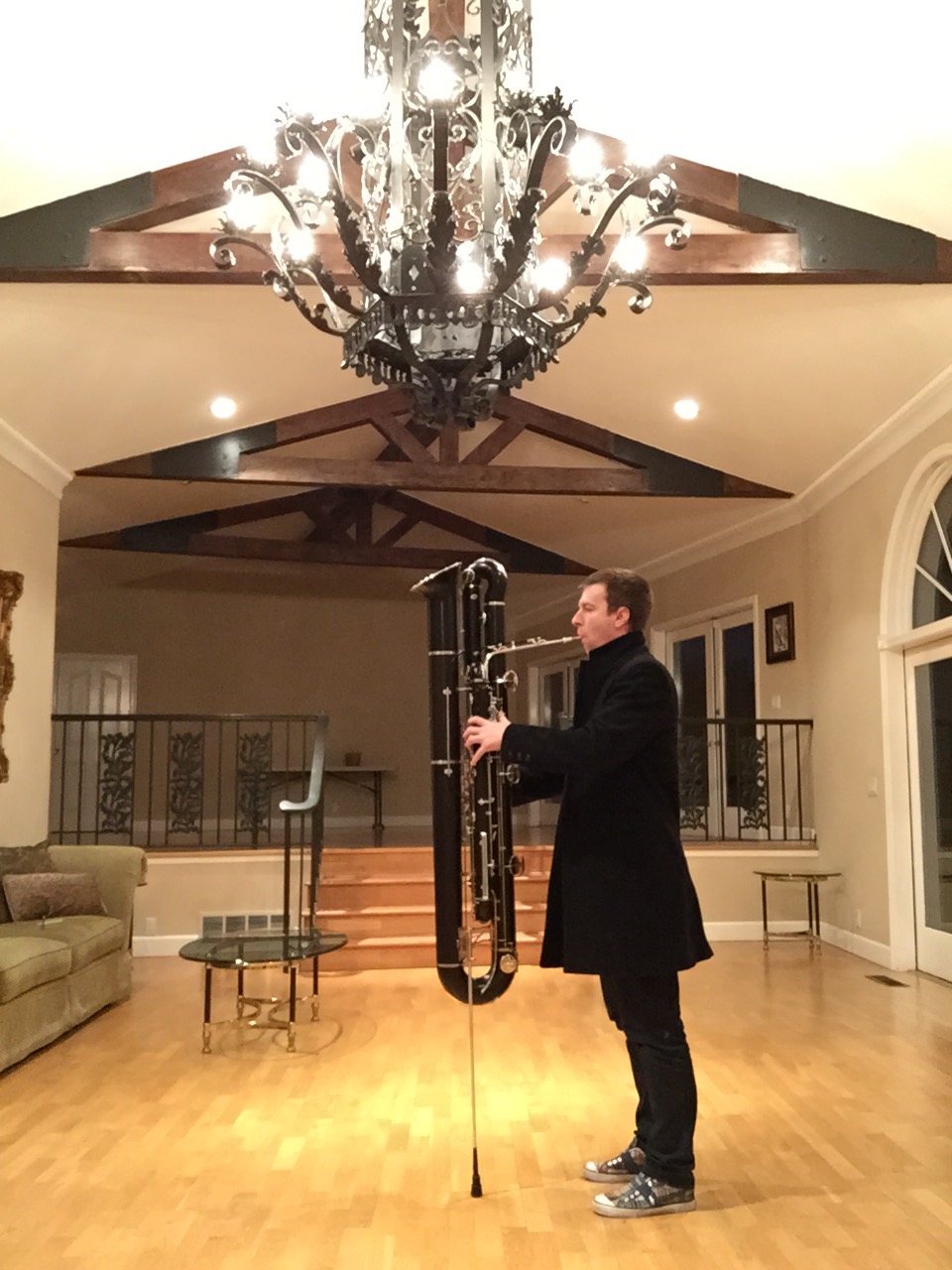
I have been jealous of bass clarinet players and contrabass flute players who are able to perform standing. It adds to the stage presence for certain pieces and is more visually interesting to watch.
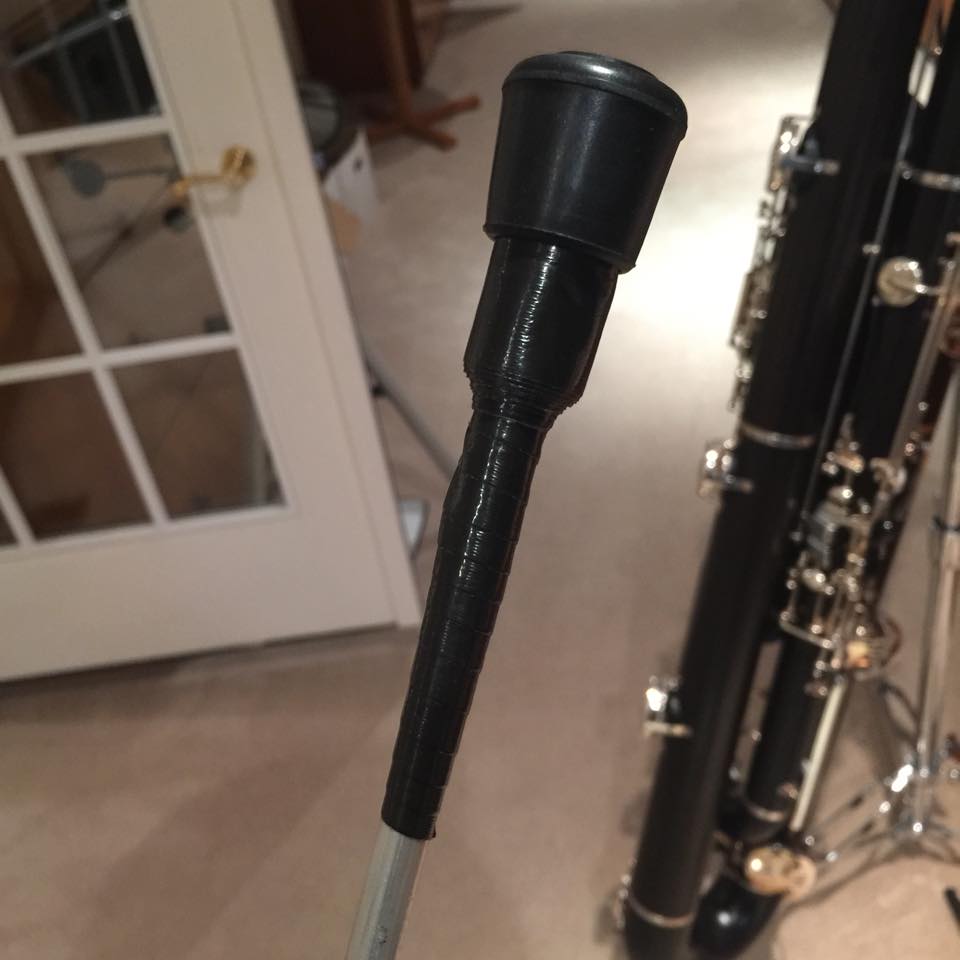
The parts that I used to make this standing peg cost under $10 and I bought it all at Home Depot.
For the Contraforte, the peg used is 3/8 inch so it was easy to find a match. I used an aluminum rod since it aluminum is easier to cut. I have my cordless reciprocating saw,Peg stock, black Duct Tape, a Rubber stopper. After cutting the peg to length based on my height, I wrapped the tape around an end to fit the rubber stop.
The Vonk is a bassoon support system created by Maarten Vonk. The system is designed to be used in place of a seat strap, leg hook, or floor peg and is unique because of it’s design and weight distribution. Essentially there is no weight put on the player’s hands when using the Vonk as long as you adjust it to the correct height. I have been using the Vonk for many years now and really enjoy it. They were popular in the Los Angeles area in the mid 2000s and I know many people who swear by them. I primarily use a seat strap for daily playing, but I bring the Vonk out for days with over 5 hours of playing. For some opera productions there will be a morning service/run through, lunch, and another run through. This is too much playing for me on top of my regular practice, so this system saves my hands.
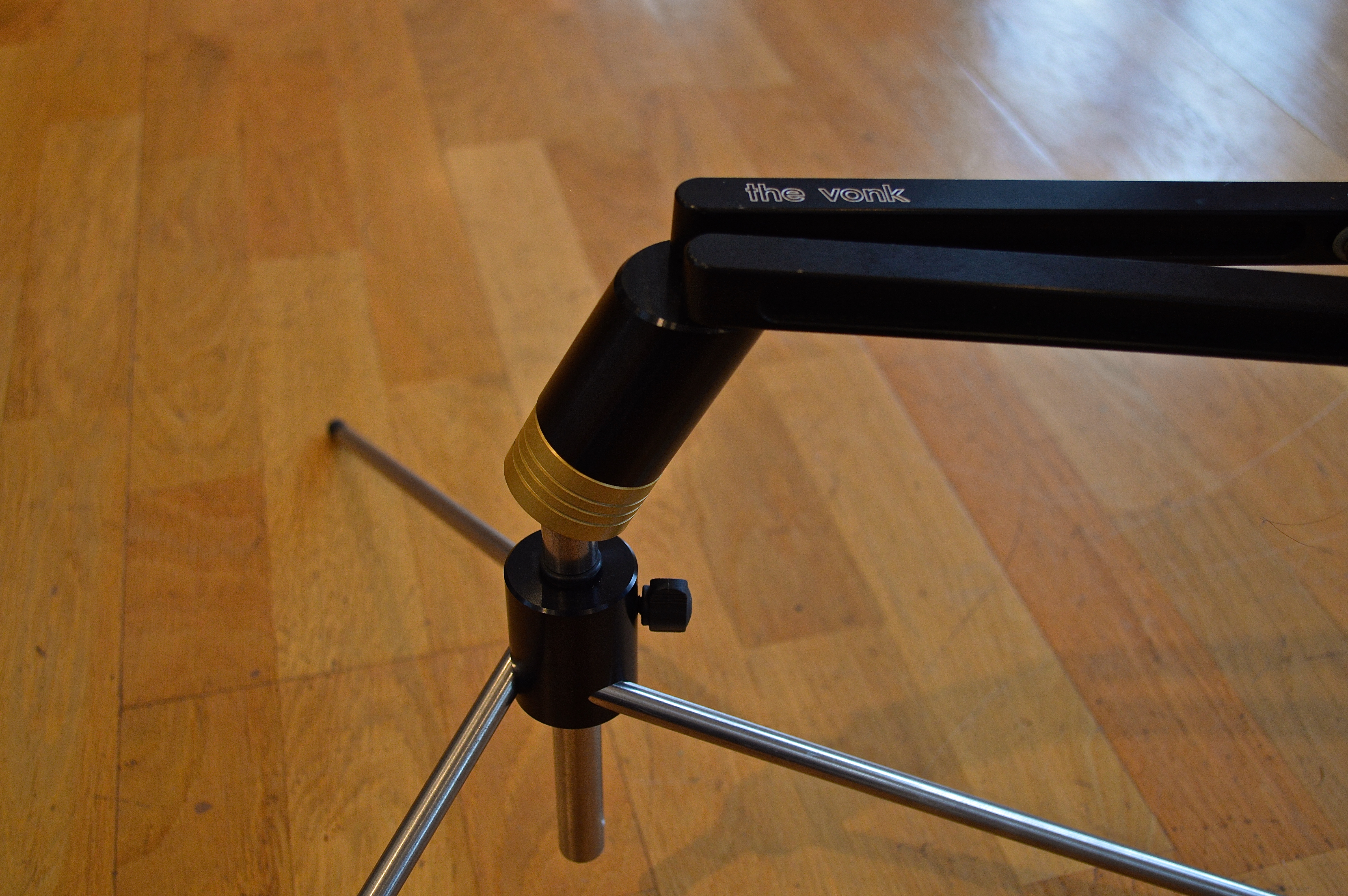
The Vonk has two metal bars that attach to the base tripod. At the other end is a nob used to tighten the boot cap into the clamp. Depending on your bassoon, the boot cap might come loose, so test this area of the bassoon to make sure that you bassoon will stay up. If the boot cap comes loose, the bassoon fill fall off. The clamp tightens at a moderate pressure, too tight might dent the boot cap and too loose might cause the bassoon to slip. I have never had a problem with this. I play on a Fox 601 and it is very sturdy, however I can see how this could be a problem for some bassoons.
The real piece of engineering that sets this system apart is the tight ball in socket joint. This joint is the counterbalance for the weight of the bassoon. With the gold section engaged the Vonk becomes a bassoon stand. It disengages the ball in socket joint and so the bassoon stands vertical (see top photo)
When the gold section is brought down, the joint it engaged. This gives a large range of motion and is adjustable. Not only is the position and angle of bassoon changeable but also the height, so it is usable with most chair heights. When the system in engaged and in position, the bassoon just floats in front of you. The Vonk is available online at Bassoon.com
“The bassoon family” is a bassoon lesson that I teach when a student is in a slump. Too many weeks on etudes or a concerto often makes high schoolers lose interest. So I give them a contra lesson, or for the students that have lessons in my home, an introduction to the bassoon family. I have two high school seniors this year, and contrabassoon will definitely be a part of college orchestra playing.
The start of each lesson is playing through the circle of fifths, 12 major scales. This is a nice way to get into contrabassoon and introduce the vent keys and the Eb keys. The student can get a small taste of standard orchestra excerpts like the Contrabassoon solos written by Ravel in his Piano Concerto in G, and Ma Mère l’Oye. Contrabassoon comes quickly to many bassoonists, and Contraforte come quickly to bassoonists who also play sax. The simple octave keys on the Contraforte make it a closer match to high woodwinds.
It’s also interesting to introduce students to the Baroque bassoon. I make a point to have students learn a baroque piece every year, since honor orchestras and college auditions ask for pieces from contrasting eras. The basic scale of the baroque bassoon is the same as modern bassoon, so a few Vivaldi concertos translate well to the baroque bassoon. This also provides a useful insight into the instrument that the piece was written for, and how lucky we are to have a modernized bassoon.
The french bassoon is mostly for informational use. To learn the lowest octave chromatically and play a few scales. I don’t teach much French repertoire to high schoolers so it’s an instrument with no direct connection to their experiences. But I Play a few recordings of french bassoon players, explain the Paris Conservatory, and the school of French players that still exist throughout the world.
Baroque Bassoon, French Bassoon, German Bassoon, Contrabassoon, Contraforte
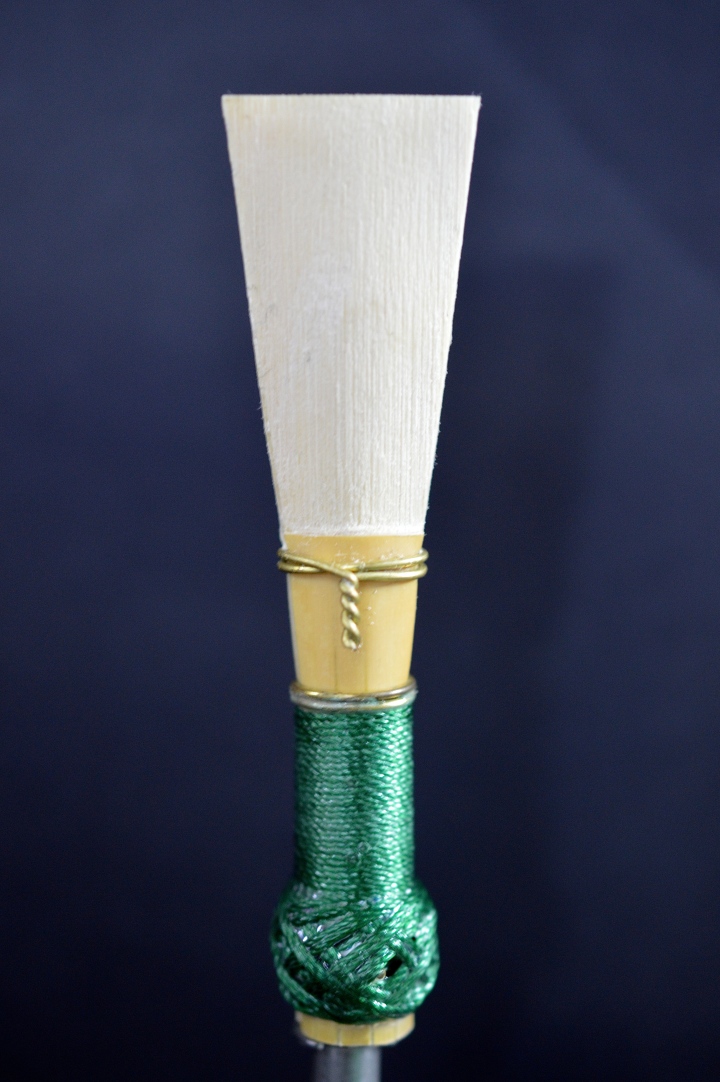
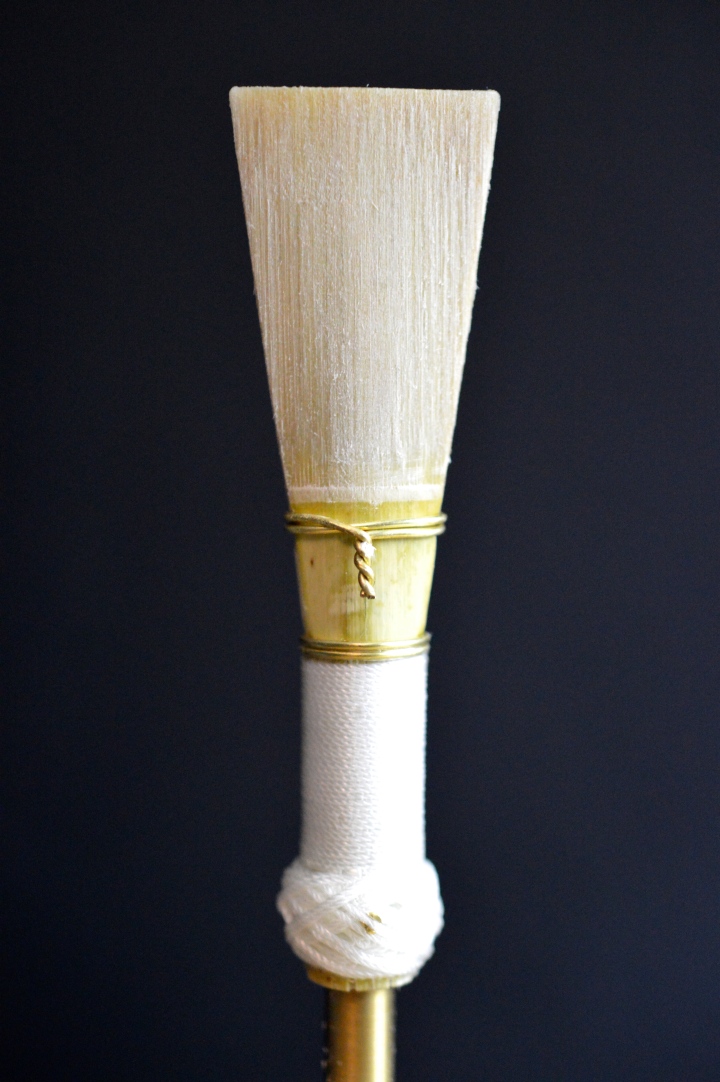
Kingbassoonreeds.com is now more affordable for contra players! The Price of Contrabassoon reeds and Contraforte reeds has dropped due to a great turnout of harvested cane from last spring. So Now there is no penalty for being a contra player!








 (I had to repair some of the slurs)













 Kristopher King