Large woodwind instruments have problems with water and condensation from regular playing. Not to mention the amount of playing that occurs in the lead in to a recital or audition. Contrabassoons are especially susceptible to water damage because they do not come apart to be swabbed, and most players cannot take their contras apart without damaging the seal when putting it back together.

Just last week I was talking to a woman who had bought a Mollenhauer contrabassoon in an estate sale. She bought half of it along with another bassoonist, and they shared it. But after a few months of playing and putting it back into the case one of them developed a cough, and through some sleuthing, found that the contrabassoon was full of mold! They brought it to a repairman who cleaned it out but it was never the same. We all heard about Trombone Lung a few years ago. This stuff can really cause respiratory ailments along the lines of Anthrax.

The best method for keeping a contrabassoon dry is to remove the tuning slide and leave it out on the stand for a few hours after playing. This won’t prevent all problems, on older contras water damage can even be seen on the outside of the instrument, through the lacquer.  The contra’s “wing joint” is the common problem, this is the first piece of wood after the first bend. The danger is mold, and that the mold can damage the seal of the instrument and eat away at the wood of the bore, changing the dimensions.

Contraforte has a bad side and a good side. The bad side is that there is no tuning slide, and so nothing can be opened to help it air out; the good side is the modular design which allows players to take apart their own instruments. I can safely loosen the C-clamps and remove a bend to clean out sections. Recently I removed the second bend for the first time to find that it was lined with mold. The first bore can air dry but after a certain point the circulation doesn’t dry out the entire bore. This means that I need to do regular checks and cleanings at least once every two months.

The best tools for preventing life in an instrument are rubbing alcohol and a dehumidifier. Find a small spray bottle capable of an extremely fine mist, as fine as an aerosol spray. fill it with rubbing alcohol and spray it down the bore when you finish playing and right before you swab (non-contra) The alcohol mist will sterilize the bore and the hard to reach tone holes with the added benefit of evaporating quickly. I even do this to my bassoon before I swab it and put it away. Having a dehumidifier drying out the air makes it difficult for mold and fungi to take hold.

Contraforte


Today I did a large scale cleaning by removing all bends and using a fine sprayer of rubbing alcohol. By spraying sections at a time and swabbing them I killed any mold spores and other microbes living inside.

Contraforte Contraforte Contraforte

I have recently invested in a great dehumidifier from Lowes which has improved the air quality. I highly recommend a dehumidifier for woodwind players or doublers. If you can imagine all of the moisture that accumulates in the air from playing multiple instruments and reed making, it makes it hard for things to dry out fully. Especially here in the San Francisco Bay Area there is constant fog and moisture from the sea. I have been keeping my instruments at 45% humidity, this has already stopped my problem of sticky pads.

Dehumidifier

With the price for new musical instruments skyrocketing, it’s not surprising that some people have actually gone into building their own instrument! Most of the people I have found who built their own horns don’t actually play but are master carpenters or handymen who are curious. Others are musicians who are testing out different possibilities of their instrument families.

This man made a wooden trumpet out of a home workshop. Although he isn’t a trumpet player, this is a functional piston trumpet.


The Bamboo Sax has been around for a while, I saw one on vacation in 2006


The least embarrassing bassoon related video I could find was of Robin Howell making a bassoon bocal, which would be interesting to try but I don’t think I would trust it!


MY favorite video on youtube right now is of this guy who built his own CONTRABASSOON! It actually sounds nice, has a recognizable scale, and doesn’t look like garbage. I was really amazed when I saw this.


ModernTimes

This last week I had the opportunity to play the film score to “Modern Times” This is one of the final silent films and the last appearance of Charlie Chaplin’s “little scamp” character. Each performance was sold out and the audience was very receptive.

This project was my first time playing a film score along with the film, and it was stressful. The conductor has strict timing to follow and so the musical cues have little prep. He mostly watches the film waiting for certain scene changes and action to start the different orchestra cues. The fun part was playing the bassoon solos which are mostly jokey and loud. there are a few cool english horn solos and  some very fast over the top tempos.

Robert Rønnes has written a great method book called Twelve Virtuoso Studies. I have been working with this book for over a year now and it has been an asset for my technique. This has been especially helpful on contrabassoon and contraforte for down slurs. Excerpts like Elektra have large down slurs that need to be clean AND sound like it’s easy. So the first exercise “Warming Up” is all middle and low range, which isolates large interval slurs. Running through this every day on contra has made a noticeable difference in my playing.


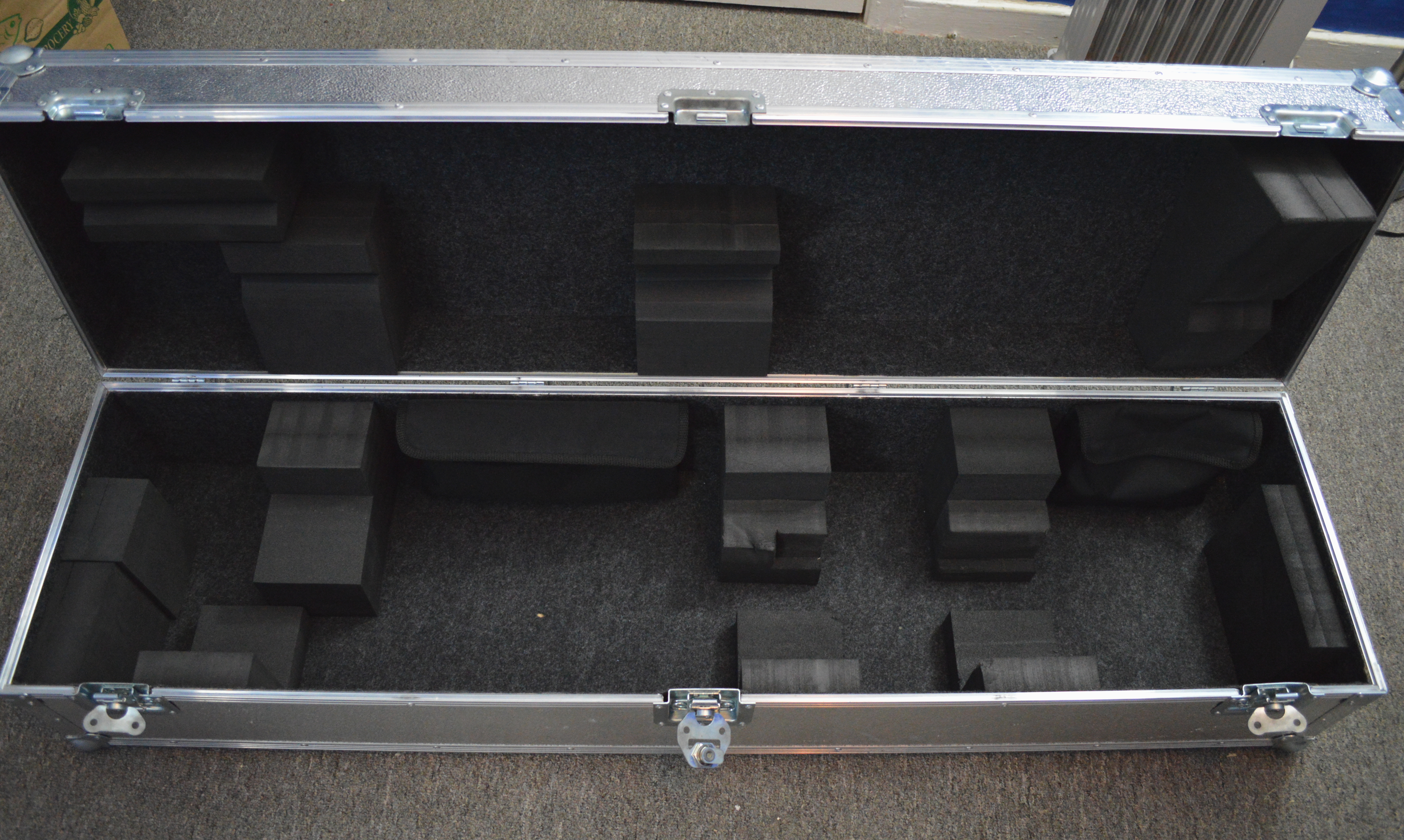
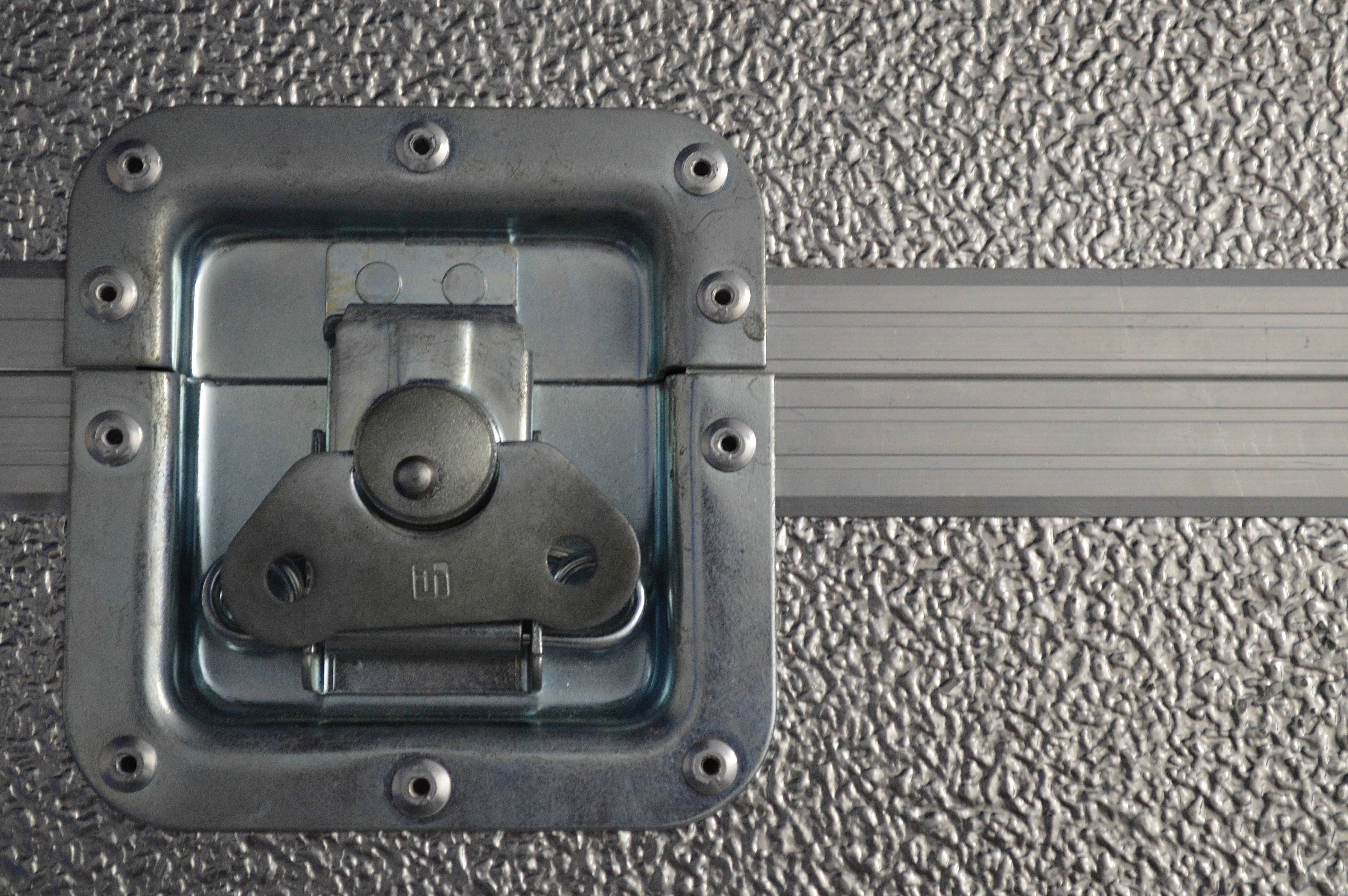
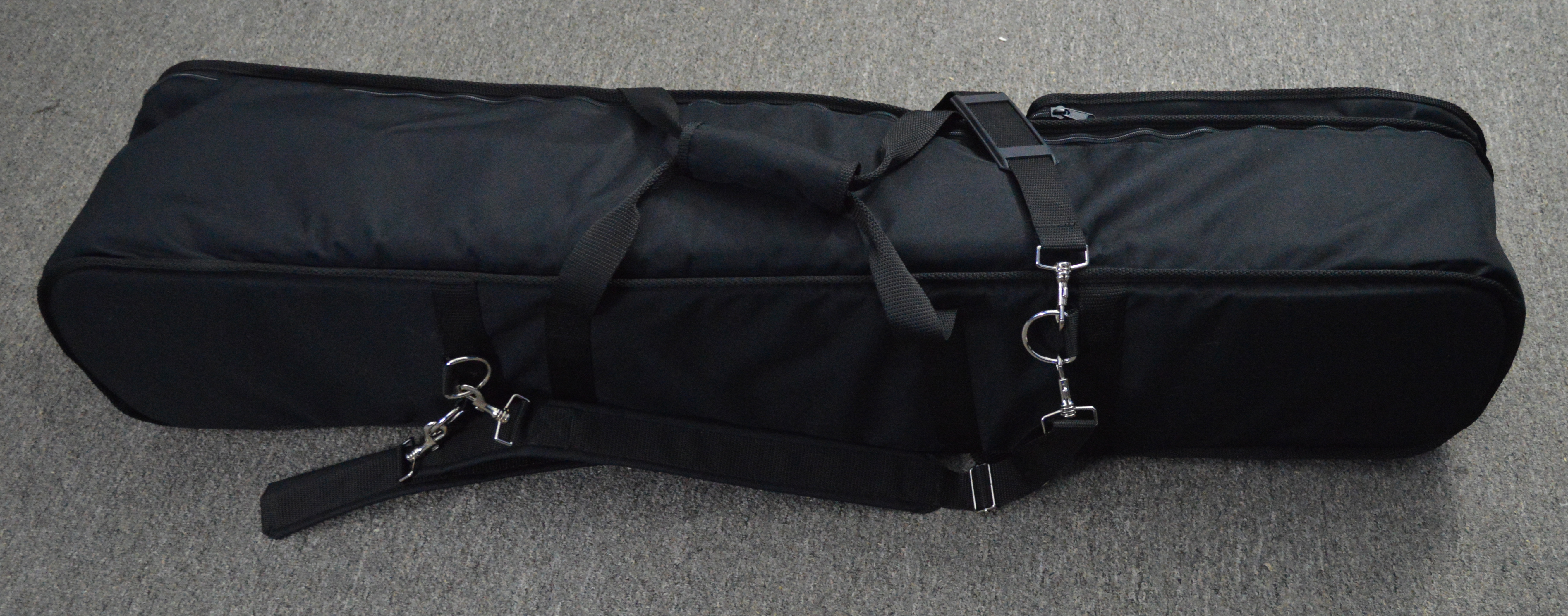
This is mostly only going to interest me, I just got a contraforte gig bag. The case that the CF came in is a large aluminum travel case and I have been trying to get a gig bag for  a few months. I tried to do some research into this gig bag; not only are there no pictures anywhere, it is not listed on the Wolf website. I was lucky enough to buy this through Midwest Musical Imports, who is the only Wolf distributor in the U.S. So here are the two cases..

The aluminum travel case is similar to what Maurice Rouillard makes at rouillardcases.com in Canada. However this case has rotating closures and wheels. The firm foam holds the CF in place, there are interior pouches for bocals and small accessories. This has been a great case but it is very large and heavy, I don’t need it for everyday use.

contraforte case

contraforte case

contraforte case

contraforte case

contraforte case

I just received the contraforte gig bag this week and so far it has been very easy to commute with. It has very thick interior padding and is lined with felt. The exterior has a music pouch, accessories pouch and backpack straps. The case does not have interior bocal storage so I’ve been keeping the bocal in an extra Fox bocal box in the front.

contraforte gig bag

contraforte gig bag

contraforte gig bag

contraforte gig bag


french whisper key

The little finger whisper key, or french whisper key; should become a standard key on the bassoon. It adds an extra option besides the whisper key lock and reduces fatigue in the repeated transition from low note thumb position to the flick key thumb position. The first example  comes from Robert Rønnes book “12 Virtouso Studies” in the first study “Warming Up” This passage is a good example of the low register to middle register thumb shift. The left thumb need to shift from the low C key across to the whisper key. However  with the little finger whisper key, you can hold down the whisper key for the entire measure. This allows the left thumb to stay in the low register position and play low C as it comes. By using the french whisper key there is the option of quickly removing it, unlike the whisper key lock. It can be added or removed during a fast passage without a reach or shifting.

Rønnes

The next example comes from Simon Kovar’s “24 Daily Exercises” and is a more common issue on the bassoon, the shift from the whisper key to flick keys. The usual technique is to leave the whisper key slightly early in order to get to the flick key in time. With a french whisper key a passage like this takes minimal energy with greater accuracy.

Kovar

skywalker

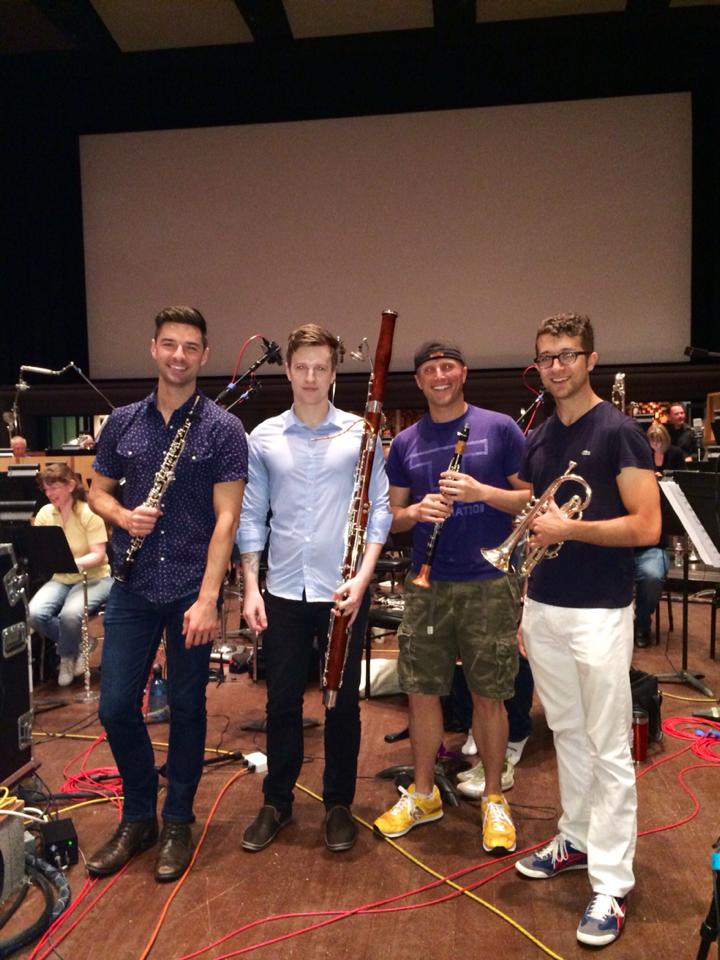
This last week I had a chance to record a session a Skywalker Ranch with the San Francisco Wind Ensemble. We even had the opportunity to work with Leslie Ann, the very talented recording engineer of Skywalker sound. In total we recorded:

Ida Gotkovsky: Poeme du Feu

David Maslanka: In Memoriam

Boris Kozhevnikov: Symphony 3

Darrol Barry: Prevailing Winds

Besides having fun at Skywalker, this gig was very different for me in that it was with a wind ensemble. I haven’t played with a wind ensemble since high school and I wasn’t very aware of my own bassoon sound at that time. Wind ensembles have saxophones, euphoniums, bass clarinet, contrabass clarinet and multiple clarinets doubling each part. So in this situation the bassoon section is at a loss; with an entire sax family and clarinet family the bassoon is barely audible. Not to mention that any dynamics I performed hardly made a dent in the overall sound of that passage. The bassoons place in a concert band a very limited and unflattering. Much of the bassoon part is rhythmic background, if it is a moving line then it is doubled by saxophones or euphoniums. I think I will stick to orchestras from now on!


Contraforte Reed

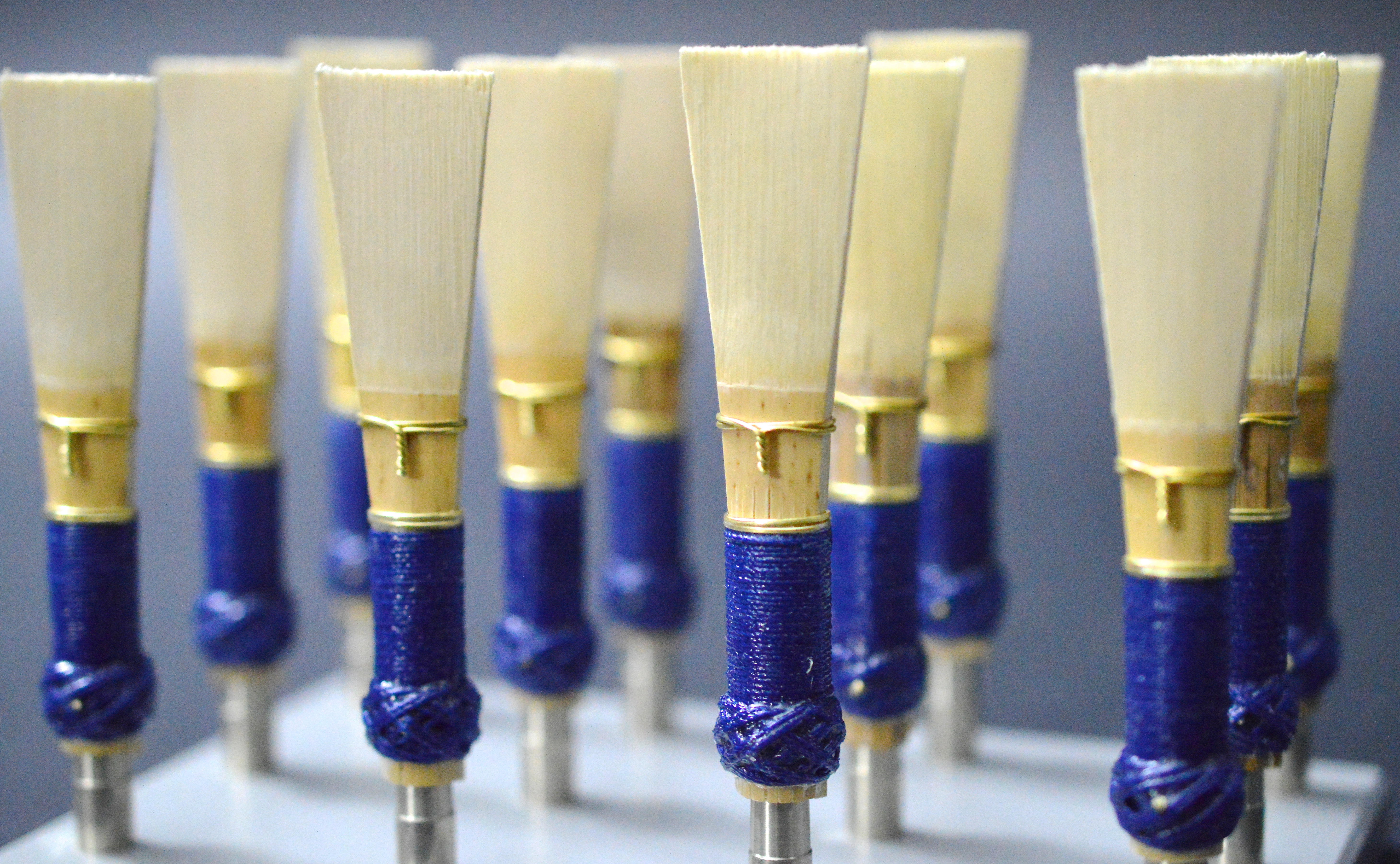
This isn’t an IDRS journal but I think it is still an appropriate place to post reed dimensions. I have only had a few months with the contraforte so far I have come to two styles of reed. One wider and one narrower, the wider shape is a real robust contraforte sound and the narrow shape is a simpler contrabassoon sound.

The wide shape is using the Reiger contraforte shape (23.25mm wide) and formed on a Reiger contraforte mandrel.

160mm cane

35mm blade (collar to tip)

45mm tube (collar to end)

5mm from first wire to second wire

The narrow reed is shaped on a Reiger K1 contrabassoon shape, it’s important to use a fold-over shaper for this since I still use 160mm cane. 160mm cane will not fit into a contrabassoon straight shaper which is meant to hold 150mm cane, but on a fold over shaper the tube continues further. Using this extra tube length also allows the reed to be formed on a contraforte mandrel. Besides using a different shape all of the dimensions are the same.

160mm cane

35mm blade (collar to tip)

45mm tube (collar to end)

5mm from first wire to second wire

contraforte reed

The narrow reed is essential to making the CF work in every situation. This style produces a simple, dryer sound, requiring less air, and achieves an easy pianissimo response.

the wide reed is now available on kingbassoonreeds.com


I get a big kick out of experimenting with my setup and trying different options. Leitzinger bocals have been around for a few years now, and I have only heard good things about them. I play a Fox 601 which has the benefit of being very flexible, the bocal that I use completely changes the instrument.

I’m very spoiled in that I live in San Francisco and pretty close to Forrests Music. I picked up a few Leitzinger bocals to play test for the week and I decided to try different platings and different alloys. When I try bocals, two bocals of the same model and size sound so different.  I don’t usually try different platings because I can’t tell if the difference is between the platings or just different bocals. I ended up with a N ML 1

Leitzinger Bocal